May 08, 2026
A refrigerant leak does not announce itself. It builds slowly — a hairline gap at a valve core, a hose fitting that was never quite flush, a charging port left exposed after a service call. By the time a technician notices the pressure drop, hours of diagnostic work may already be ahead. The frustrating part is that many of these situations are avoidable. Knowing which Refrigerant Accessories address which vulnerabilities, and why they work the way they do, makes a real difference in how a system holds up over time.
Leaks tend to cluster around the same handful of locations. Schrader valve cores loosen with age, especially on systems that are serviced frequently. Hose connections fail when they are not seated properly during installation — sometimes just slightly off, enough to allow a slow weep under pressure. Charging ports that are left uncapped after maintenance become entry points for debris, which gradually degrades the sealing surface beneath.
There is also the pressure angle. Systems that cycle through wide pressure swings put repeated mechanical stress on fittings and joints. Over enough cycles, even a well-made connection can develop a small leak that grows. Add aging O-rings and hardened seals to the picture, and it becomes clear why refrigerant loss is so common on older equipment.
Common leak origins include:
Pinpointing these locations early is where Refrigerant Accessories earn their place in a service kit.
Here is the thing about Refrigerant Accessories — they are not all doing the same job. Some create a physical seal. Others regulate pressure to take stress off the fittings around them. A few act as barriers between service intervals, preventing refrigerant from slowly working its way out through a valve that is technically closed but not perfectly so.
What separates an accessory that actually helps from one that just occupies a connection point comes down to a few specifics:
An accessory with these characteristics does active work in the system. It is not just hardware that fills a port.
With traditional connections, disconnecting a service line almost always releases a small burst of refrigerant — brief, but cumulative across dozens of service visits. Quick couplers solve this by closing the flow path on both sides before the coupling separates. No open port, no refrigerant flash.
This matters more than it might seem during routine service work. A technician running multiple service calls in a day will connect and disconnect equipment repeatedly. Without a coupler that seals on separation, that refrigerant loss adds up quietly across the whole service season.
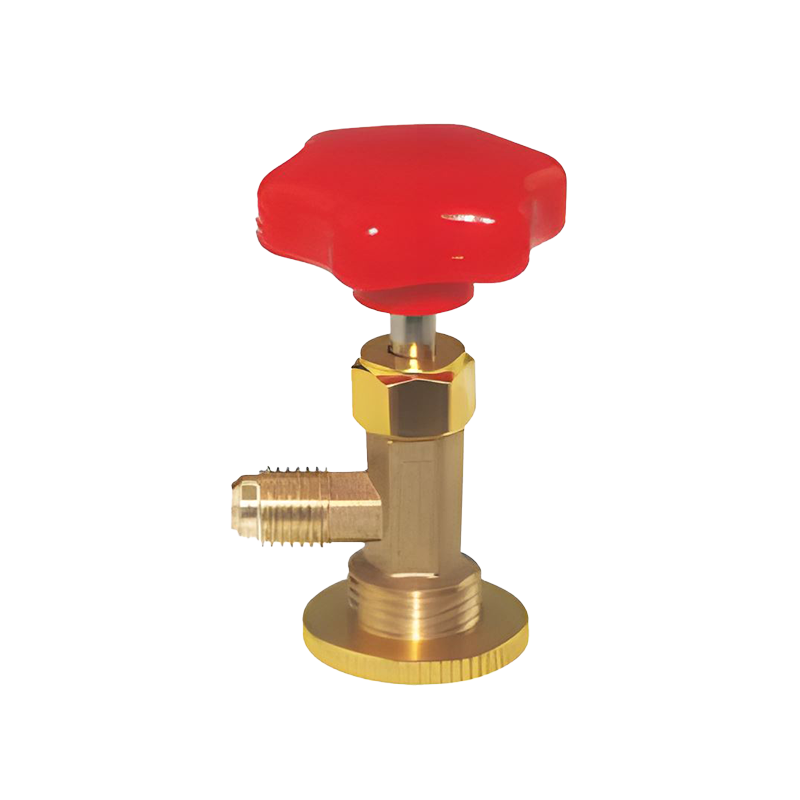
A charging valve that seals well when closed is almost invisible in terms of maintenance — you just do not think about it. A valve with a worn core or a degraded internal seal is a different story. Refrigerant can seep past it even when the system is sitting idle, which makes diagnosing the source of a slow pressure drop genuinely difficult.
Well-made charging valves hold tight tolerances at the valve seat and use internal seals rated for long-term refrigerant contact. When refrigerant levels drop unexpectedly on a system that has not been opened for service, the charging valve is worth checking early in the diagnostic process.
People underestimate locking caps. They look like a minor finishing touch — something you throw on a valve port before closing up the panel. But a port without a cap on a pressurized system is genuinely exposed. A slightly loose valve core under pressure will push refrigerant through. Dust and moisture that settle into an uncapped port degrade the sealing surface over time, making future leaks more likely even after a cap is added later.
Locking caps add a second layer between the refrigerant and the atmosphere. They are inexpensive. The impact on long-term system integrity is disproportionate to their cost.
Standard service hoses develop problems in predictable ways. Repeated pressure cycling stresses the hose wall. UV exposure makes the outer layer brittle. Temperature swings during operation cause materials to expand and contract, and over time that movement works on the fittings at each end. Reinforced hoses use a layered wall structure — typically a braided inner layer — that resists these stresses more effectively than single-layer construction.
The fitting quality matters just as much as the hose itself. A precisely crimped fitting with a smooth seating surface holds a tighter connection and is far less prone to refrigerant migration through the joint. A fitting that is slightly rough or uneven at the seat is a slow leak waiting to develop.
Leak detectors do not stop a leak from forming. What they do is catch it before the loss becomes significant. Electronic detectors can pick up refrigerant presence at concentrations that would not yet register as a pressure drop or a performance change. At that stage, the fix is usually simple — tighten a connection, replace a valve core, swap out a hose fitting.
Wait until the system is underperforming before running a leak check, and the repair conversation gets more complicated. Running detection sweeps after service calls and after any system installation is a straightforward practice that pays off in reduced refrigerant waste and fewer emergency callbacks.
| Accessory | Primary Function | Leak Prevention Mechanism |
|---|---|---|
| Quick Coupler | Connect/disconnect service lines | Closes flow path before separation |
| Charging Valve | Control refrigerant flow during service | Precision seat prevents idle seepage |
| Locking Cap | Protect valve cores and ports | Secondary seal against pressure release |
| Reinforced Hose | Transfer refrigerant during service | Layered construction resists cracking |
| Leak Detector | Monitor refrigerant concentration | Early identification of loss points |
| Safety Valve | Relieve excess pressure | Prevents stress fractures at fittings |
No single accessory covers all the bases. The combination is what makes a service setup genuinely tight.
A system that holds its refrigerant charge runs the way it was designed to run. The compressor does not work harder to compensate for a low charge. Cycle times stay within spec. Service intervals stretch out. None of that happens when refrigerant is quietly bleeding off between visits.
The upfront cost of quality Refrigerant Accessories is recovered through fewer emergency calls, reduced refrigerant replenishment, and compressor components that are not running under avoidable stress. It is not a complicated equation — but it does require the right hardware in place from the start.
Refrigerant handling is regulated in most markets, and the requirements tend to be specific. Technicians are often required to document usage, demonstrate that loss is being controlled, and use service equipment that meets defined standards. Systems that leak are systems that fail those requirements.
Refrigerant Accessories that support proper sealing and controlled handling make compliance a natural outcome of good practice rather than a separate effort. When an inspection or audit comes around, having consistent documentation and the right hardware in place simplifies the process considerably.
Getting the right Refrigerant Accessories starts with knowing your system's requirements — pressure ratings, refrigerant type, connection standards. Those need to match. But beyond the spec sheet, manufacturing consistency is the variable that actually determines whether a product holds up in the field. An accessory that performs well in one production run but varies in the next is a reliability problem waiting to surface.
When evaluating potential suppliers, a few things are worth examining directly:
Having a supplier with in-house manufacturing gives buyers a clearer view of how products are made and a more direct path when quality questions come up. It removes a layer of uncertainty from the sourcing process.
Refrigerant leakage is not something that has to be accepted as part of routine system operation. Most of the common failure points are addressable with the right components — and addressing them early, rather than after a leak has developed, is where the real savings come from. The work of preventing leakage is mostly done at the accessory level: the valve that seals properly, the hose that holds under pressure, the cap that keeps a port protected between service calls. For those sourcing Refrigerant Accessories at scale — whether for ongoing service operations, OEM manufacturing, or wholesale distribution — Wenling Xinsheng Mechanical and Electrical Co.,Ltd. brings direct production capability and a broad product range to the conversation. Getting in touch to discuss specific application needs is a practical way to find out whether their manufacturing scope lines up with what your operations require.
Related Products

Chengbei Industrial Zone, Xinhe Town, Wenling City, Zhejiang Province, China
Copyright © Wenling Xinsheng Mechanical and Electrical Co., Ltd. All Rights Reserved.



 English
 русский
 Español