Nov 06, 2026
Picking a vacuum pump isn't something refrigeration equipment manufacturers can treat as an afterthought. During system evacuation, the pump pulls air, moisture vapor, and other non-condensables out of the circuit before charging. Do a poor job and you're asking for elevated operating pressures, weaker heat transfer, contaminated lubricant, and components that fail earlier than they should. For OEM buyers, choosing a Vacuum Pump for Refrigeration means working through the production process, target vacuum level, pump capacity, compatibility, and long-term service requirements—not just comparing catalog numbers.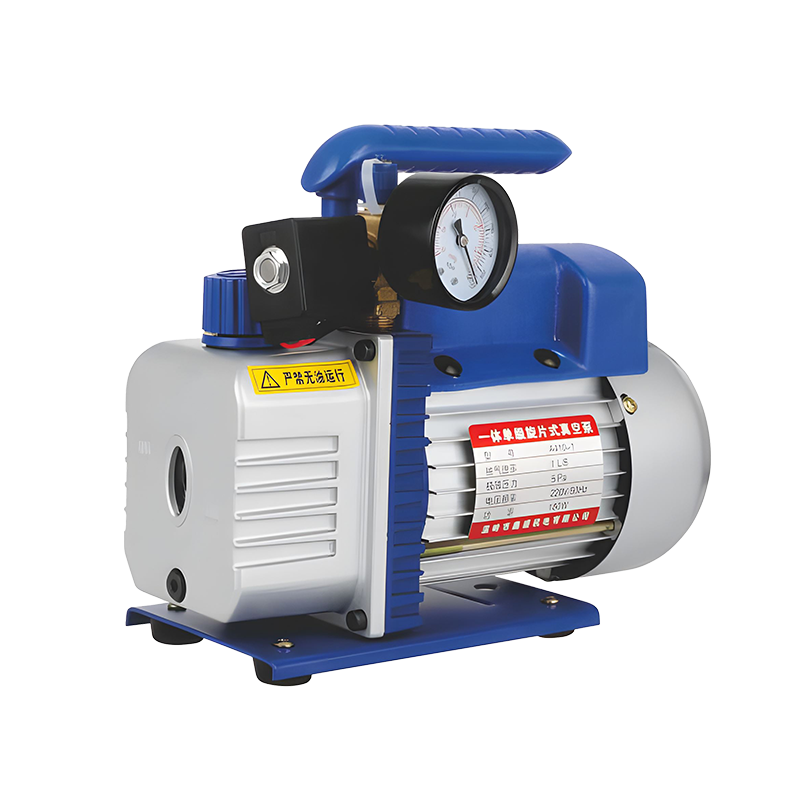
Define the Required Vacuum Level
Start with the vacuum level the refrigeration system and manufacturing procedure actually demand. Moisture trapped inside a sealed circuit can freeze at low temperatures or react with refrigerant and lubricants, which puts reliability at risk. Air and other non-condensable gases interfere with performance too.
Buyers need to separate the pump's ultimate vacuum rating from the vacuum level the assembled system has to reach. A pump might hit a deep vacuum under specified test conditions, but real results depend on hose diameter and length, connection quality, system volume, leaks, and moisture load. Use the equipment manufacturer's evacuation procedure and applicable industry requirements to set the target. Selecting a pump based only on its advertised ultimate pressure is a common trap—and an expensive one.
Match Pump Capacity to Production Needs
Pumping speed determines how quickly a pump can remove gas from a system. A higher nominal flow rate can shorten evacuation time, but it doesn't guarantee proportionally faster results. Restrictions in hoses, manifolds, valves, and service ports can limit effective flow right at the system.
OEM buyers should consider the internal volume of the refrigeration circuit, the number of units processed per shift, and the required cycle time. On a production line, the pump has to support throughput without becoming a bottleneck. For service-oriented or low-volume work, portability and ease of handling may matter more than raw speed.
| Selection factor | What OEM buyers should verify | Why it matters |
|---|---|---|
| Ultimate vacuum | Rated pressure and test conditions | Indicates deep-vacuum capability |
| Pumping speed | Flow rate at relevant pressure ranges | Influences evacuation time |
| Oil management | Oil capacity, sight glass, and replacement process | Supports consistent performance |
| Gas ballast | Availability and operating instructions | Helps manage water vapor in suitable applications |
| Motor and power | Voltage, frequency, current, and duty rating | Ensures factory compatibility |
| Connections | Port sizes and included fittings | Reduces restrictions and setup time |
Choose the Appropriate Pump Technology
Oil-sealed rotary vane pumps are widely used for refrigeration evacuation. They can achieve deep vacuum and come in a range of capacities. Performance depends on clean, suitable vacuum oil and correct maintenance. Moisture absorbed by the oil can reduce pumping performance, so oil condition needs monitoring and changing per the manufacturer's instructions.
Other pump technologies may fit particular production environments or maintenance preferences. Dry pumps avoid oil contamination in the pumping chamber, though achievable vacuum, cost, and application suitability vary by design. Compare verified technical specifications and operating costs for the intended process rather than assuming one technology wins across the board.
A gas ballast can help an oil-sealed pump handle water vapor by reducing condensation inside the pump. Use it according to the manufacturer's procedure—running with the gas ballast open can affect the ultimate vacuum achieved.
Check Refrigerant, Oil, and Material Compatibility
A vacuum pump is generally used before refrigerant charging, but OEMs should still verify that the pump and accessories suit the full evacuation and production workflow. Check seal materials, hose construction, fittings, and any components that may contact refrigerant, compressor oil, or cleaning agents.
Prevent cross-contamination between different refrigerants and lubricants. Use dedicated or properly cleaned hoses and manifolds where the process requires them. The pump itself shouldn't be used to recover refrigerant; recovery requires appropriately rated recovery equipment.
Evaluate Reliability and Maintenance
For OEM production, downtime affects output, delivery schedules, and operating costs. Assess expected service intervals, availability of replacement vanes and seals, oil specifications, filter requirements, and local technical support. A clear maintenance procedure should be practical for production staff to follow—if it's too complicated, it won't get done.
Useful features include an oil-level sight glass, accessible drain, thermal protection, and a robust housing. Noise, vibration, weight, and heat generation deserve review when pumps operate near assembly stations or get integrated into automated equipment.
Ask suppliers for performance curves, ultimate vacuum test conditions, duty-cycle limits, electrical specifications, and recommended maintenance schedules. Sample testing on representative refrigeration circuits tells you more than comparing catalog figures.
Build the Pump into a Verified Evacuation Process
Even a high-quality Vacuum Pump for Refrigeration can't compensate for leaking connections, undersized hoses, or an incomplete evacuation procedure. OEMs should define connection standards, hose dimensions, leak-check methods, evacuation duration, and the method used to verify final vacuum. A calibrated vacuum gauge positioned appropriately on the system gives a more reliable indication of system pressure than relying solely on the pump's built-in gauge.
The right purchasing decision combines technical performance with production fit, maintainability, and supplier support. Validate the pump against real circuit designs and factory cycle requirements, and OEM buyers can establish a repeatable evacuation process while reducing avoidable quality risks. That's the practical path—not chasing headline specs, but matching the pump to the job.
Related Products

Chengbei Industrial Zone, Xinhe Town, Wenling City, Zhejiang Province, China
Copyright © Wenling Xinsheng Mechanical and Electrical Co., Ltd. All Rights Reserved.



 English
 русский
 Español