Oct 02, 2026
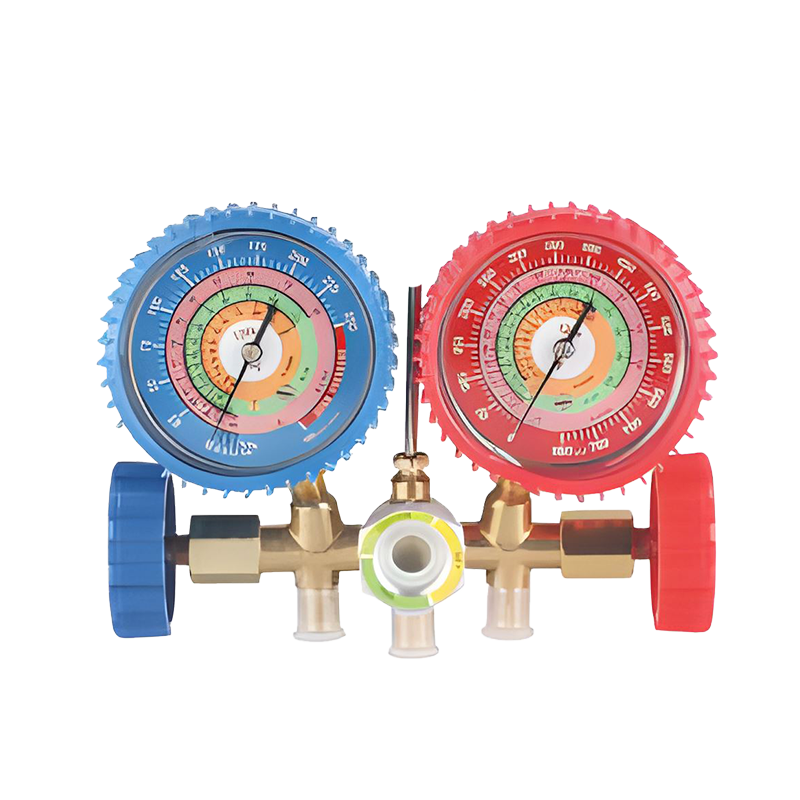
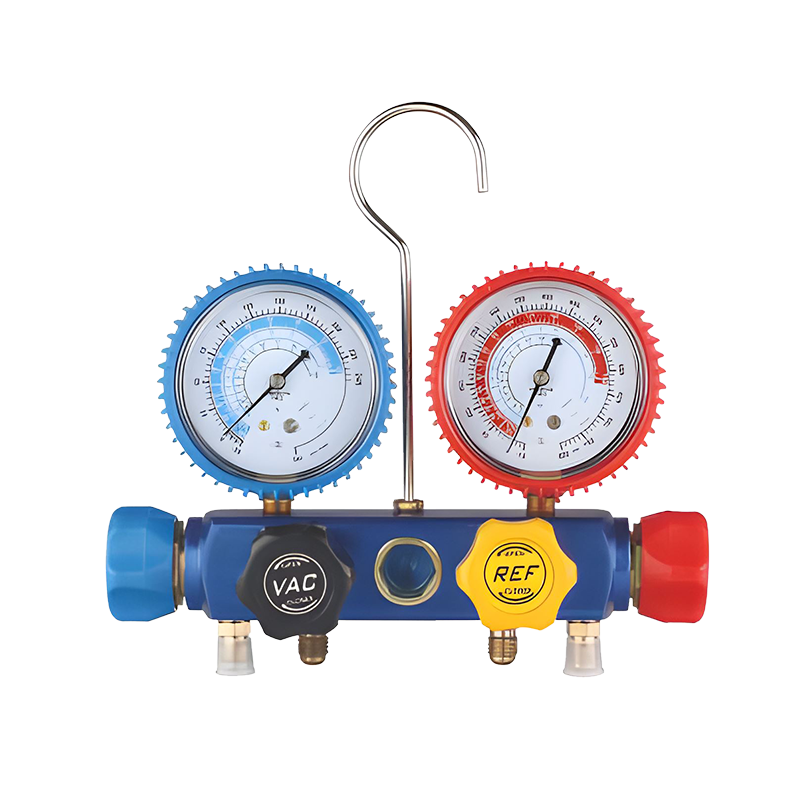
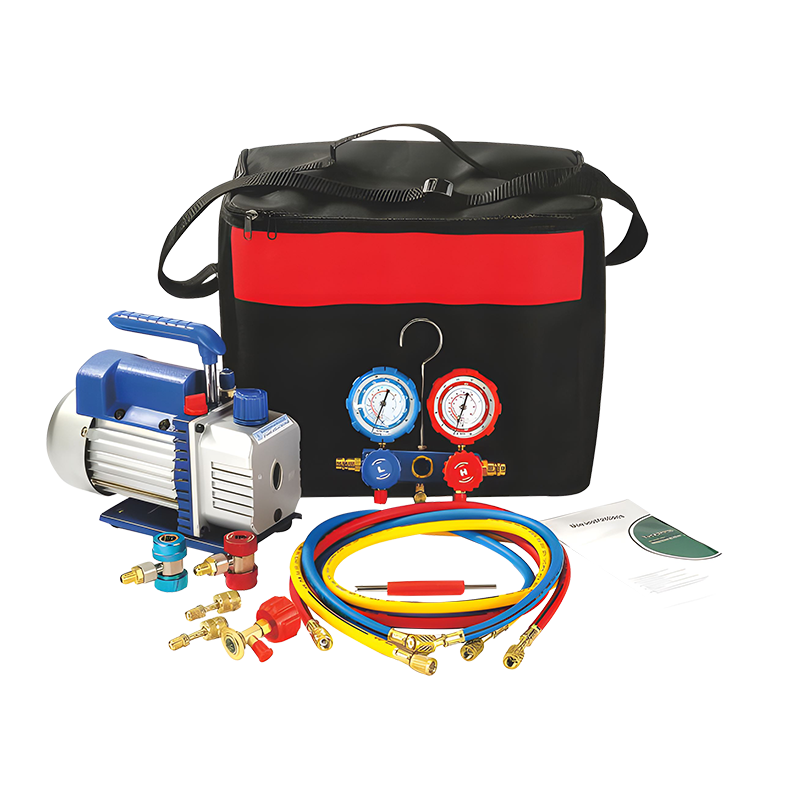
Choosing an HVAC service tool is not simply about looking at the product name or counting how many gauges come with it. A Vacuum Pump Manifold Gauge Set needs to suit the refrigerant, pressure range, hose connections, evacuation requirements, and working conditions of the equipment being serviced.
For HVAC contractors, refrigeration technicians, wholesalers, distributors, and tool manufacturers, these details can have a real impact on day-to-day work. A manifold set intended for a small residential air conditioner, for example, may not be the right fit for commercial refrigeration or larger HVAC equipment.
This guide looks at the main specifications buyers should pay attention to and explains how they relate to different HVAC applications.
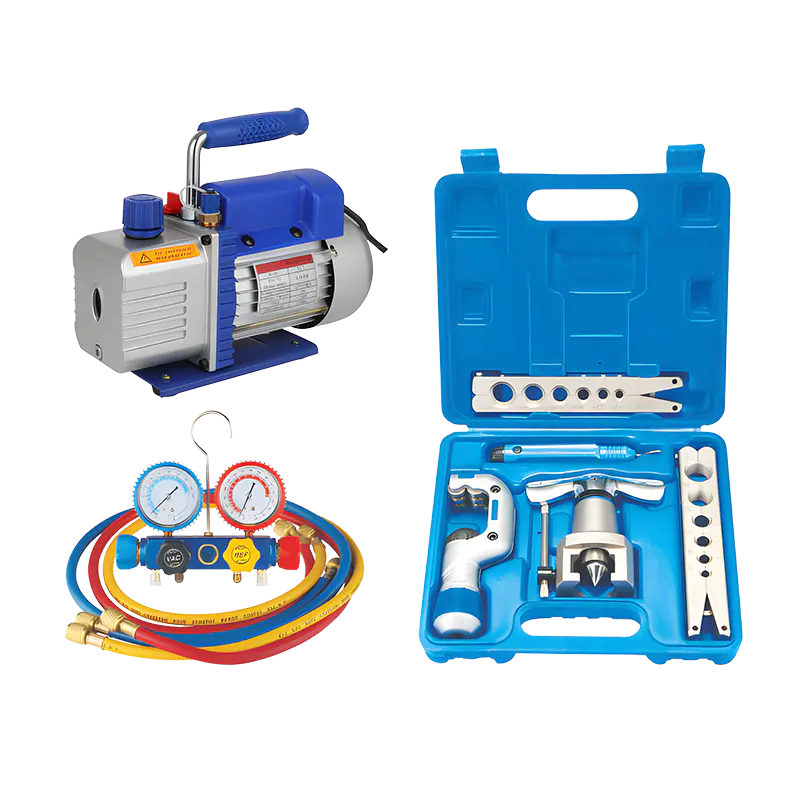
A manifold gauge set is commonly used to check system pressure and connect service equipment to the refrigeration circuit. When it is used with a vacuum pump, it can also be part of the system evacuation setup.
Depending on the design, a set may be used for:
The right set should make these jobs easier while giving technicians readings and connection options that suit the system.
It helps to start with the actual HVAC application. The system type, refrigerant, pressure range, and service procedure all need to be considered before selecting a product.
Pressure range is one of the key specifications to check.
Different refrigerants and HVAC systems can operate at different pressure levels. If the gauge range does not fit the application, the readings may be difficult to use, or the gauge may simply not cover the conditions the technician needs to measure.
Residential air-conditioning equipment, heat pumps, and commercial refrigeration systems, for instance, can have quite different pressure requirements.
| Application | Main gauge consideration |
|---|---|
| Residential air conditioning | Common low/high pressure range |
| Heat pump | Range suitable for changing operating conditions |
| Commercial refrigeration | Refrigerant-specific pressure requirements |
| Larger HVAC equipment | Higher pressure rating and suitable readability |
| Specialized systems | Application-specific gauge scale |
The safest approach is to compare the gauge specifications with the service requirements provided by the equipment manufacturer.
The refrigerant used in the HVAC system should always be confirmed before a manifold gauge set is purchased.
Today's HVAC equipment can use several different refrigerant families, and their pressure characteristics are not necessarily the same. Some manifold gauges have temperature scales for specific refrigerants, while others are designed for use across a wider range of applications.
The hoses and fittings also need to be suitable for the intended refrigerant and service setup.
Before placing an order, B2B buyers should check:
Just because a fitting physically connects does not necessarily mean the complete tool is suitable for that refrigerant or application.
A manifold gauge can show vacuum conditions, but that does not mean it replaces a dedicated micron gauge.
During system evacuation, technicians may need to know how deeply the system has been evacuated. A micron gauge measures very low absolute pressure with much greater resolution, making it more appropriate when a specific evacuation level needs to be verified.
So, before buying, it is worth checking whether the product:
For professional evacuation work, these are not small details. They can change how the tool is used in the field.
Hoses may seem like a basic part of the kit, but they can affect how the whole evacuation setup performs.
During evacuation, a restrictive hose can reduce gas flow between the HVAC system and the vacuum pump. Internal diameter, hose length, fitting design, and sealing all have an effect on the setup.
For everyday HVAC service, flexibility and durability matter too. Technicians often have to work around equipment where access is awkward, so a hose that is difficult to position quickly becomes a nuisance.
| Hose specification | Why it matters |
|---|---|
| Internal diameter | Affects evacuation flow |
| Length | Influences flexibility and setup |
| Pressure rating | Must suit the system |
| Fitting type | Determines connection compatibility |
| Material | Affects durability and chemical resistance |
| Sealing | Helps reduce leaks |
When working with larger systems, buyers may want to pay closer attention to hose flow characteristics during evacuation.
HVAC equipment does not always use the same service connections.
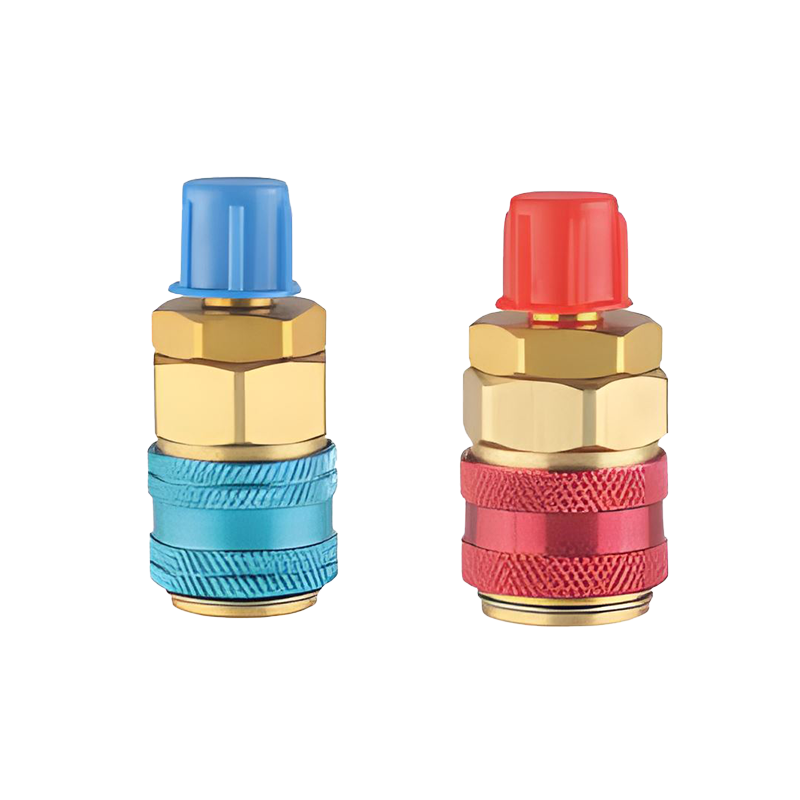
A manifold gauge set may come with particular fittings based on the market or application it was designed for. Adapters can help in some situations, but every extra connection creates another sealing point that needs to be checked.
B2B buyers should confirm:
This becomes especially important for distributors supplying tools to different HVAC markets. A configuration that works for one customer may not necessarily work for another.
Three-valve manifold sets are common in conventional HVAC service. They generally provide connections for the low side, high side, and service or utility line.
Four-valve designs add another connection and can provide more flexibility for certain service procedures.
However, the number of valves by itself does not tell you whether one set is more suitable than another. It needs to match the technician's actual working method.
Valve construction is worth checking as well. Handle design, sealing, materials, and operating feel can all matter. When a technician is using the tool repeatedly throughout the day, a valve that is awkward to turn can become a real inconvenience.
Pressure readings are often an important part of HVAC diagnosis, so gauges should be easy to read and appropriate for the job.
A larger gauge face can make readings easier to check quickly, especially when technicians are working outdoors or in mechanical rooms with limited lighting. Clear scales also help when several refrigerant temperature or pressure references appear on the same gauge.
Some useful gauge specifications include:
| Gauge factor | What to check |
|---|---|
| Pressure range | Covers intended system conditions |
| Accuracy | Suitable for diagnostic work |
| Scale clarity | Easy to interpret |
| Face size | Practical for field use |
| Protection | Resistant to normal impact |
| Refrigerant scale | Matches target applications |
Both analog and digital gauges have their place. The choice usually comes down to the technician's workflow, preferred way of working, and the functions needed on the job.
Analog manifold gauges are still widely used because the operating principle is familiar and straightforward. For technicians who prefer direct mechanical pressure indication, they can be a practical option.
Digital systems may add functions such as numerical pressure readings, refrigerant databases, temperature calculations, or data recording, depending on the model.
| Type | Potential benefit | Consideration |
|---|---|---|
| Analog | Simple and familiar | Requires reading physical scales |
| Digital | Numerical readings and added functions | Requires batteries and electronic components |
| Hybrid | Combines different functions | May have greater complexity |
For B2B sourcing, it makes sense to select the format around actual customer requirements. There is no need to assume that every technician wants the same type of gauge.
HVAC service tools are often used in places that are not especially gentle. Rooftops, outdoor units, mechanical rooms, workshops, and refrigeration areas can all expose equipment to knocks, dust, moisture, oil, and frequent handling.
The manifold body, gauge protection, hoses, valves, and fittings should therefore be made for the working environment they are expected to handle.
Useful construction details to review include:
For mobile technicians, a compact and lightweight design may be useful. In heavier commercial or industrial service, buyers may put more emphasis on rugged construction and long-term use.
Working temperature, humidity, oil, dust, and moisture can all influence tool selection.
For example, outdoor air-conditioning service may expose a technician to high temperatures, while refrigeration equipment can be located in much colder environments. Hose and seal materials should be appropriate for the conditions in which the tool will actually be used.
Buyers should check the manufacturer's stated operating specifications instead of assuming that a tool designed for indoor HVAC work will perform the same way in every outdoor or industrial setting.
Different HVAC applications naturally create different priorities. The same manifold configuration does not have to be used everywhere.
For typical residential systems, technicians may care most about portability, clear pressure readings, suitable service fittings, and simple operation.
A compact three-valve manifold gauge set can work well for routine service when its pressure range, refrigerant compatibility, and connections match the equipment being serviced.
Heat pumps can operate under different conditions when switching between heating and cooling modes. This makes a suitable pressure range and reliable connections particularly important.
The manifold gauge set should provide readings appropriate for the refrigerant used in the particular heat pump system, including the pressure conditions expected during service.
Commercial refrigeration work can put more emphasis on hose durability, working pressure, connection compatibility, and the overall evacuation setup.
Because service may be performed frequently, valve construction and gauge protection can also become more important. Technicians need tools that fit into their regular workflow without creating unnecessary extra steps.
Larger HVAC systems may require a more efficient evacuation setup and greater flexibility when connecting service equipment.
In these applications, technicians may use the manifold gauge set together with dedicated vacuum hoses, core tools, isolation valves, and a micron gauge.
The manifold should therefore be viewed as one part of the complete service system, not as an isolated tool.
Leaks can interfere with pressure readings and evacuation results, which is why every connection point deserves some attention.
Common areas to inspect include:
Hoses should be checked regularly for damaged ends, worn seals, cracks, or other signs of use. Connections should also be kept clean because dirt or debris can prevent a proper seal.
For manufacturers, sealing performance should be included in product inspection and quality-control procedures. Small connection issues can cause problems once the tools are being used on an actual refrigeration circuit.
Wholesalers, distributors, and HVAC tool brands should ask for complete technical information before placing a larger order.
Some useful questions are:
For larger purchasing programs, sample testing is also worth considering. It gives buyers a chance to check whether the physical product matches the stated specifications before committing to a larger quantity.
Before selecting a Vacuum Pump Manifold Gauge Set, buyers can compare the following points:
| Specification | Main reason to check |
|---|---|
| Pressure range | Matches system operating conditions |
| Refrigerant compatibility | Prevents application mismatch |
| Vacuum capability | Supports evacuation work |
| Gauge accuracy | Helps pressure diagnosis |
| Hose size | Affects flow and flexibility |
| Pressure rating | Supports the intended system |
| Fittings | Ensures proper connection |
| Valve design | Affects service control |
| Construction | Supports field durability |
| Spare parts | Helps with long-term maintenance |
This checklist can also be useful for distributors comparing different suppliers. Looking at technical specifications makes it easier to distinguish between products that may look similar at a glance.
There is no single manifold gauge configuration that works for every HVAC application.
Residential technicians may put more emphasis on portability and common service connections. Heat pump service can call for a pressure range that covers different operating modes. Commercial refrigeration work may place greater attention on durability, fitting compatibility, hose performance, and evacuation efficiency. Larger systems may require the manifold to work alongside dedicated vacuum measurement equipment.
For manufacturers, wholesalers, and distributors, the selection process should start with the target application and refrigerant. From there, pressure range, hose construction, fittings, valve configuration, vacuum capability, and gauge readability can be matched with the actual service requirements.
A Vacuum Pump Manifold Gauge Set is more than a group of gauges and hoses. It forms part of the technician's wider service setup. Taking a little time to review the specifications before purchasing can help avoid connection problems, improve tool compatibility, and make the set more practical for everyday HVAC service.
Related Products

Chengbei Industrial Zone, Xinhe Town, Wenling City, Zhejiang Province, China
Copyright © Wenling Xinsheng Mechanical and Electrical Co., Ltd. All Rights Reserved.



 English
 русский
 Español