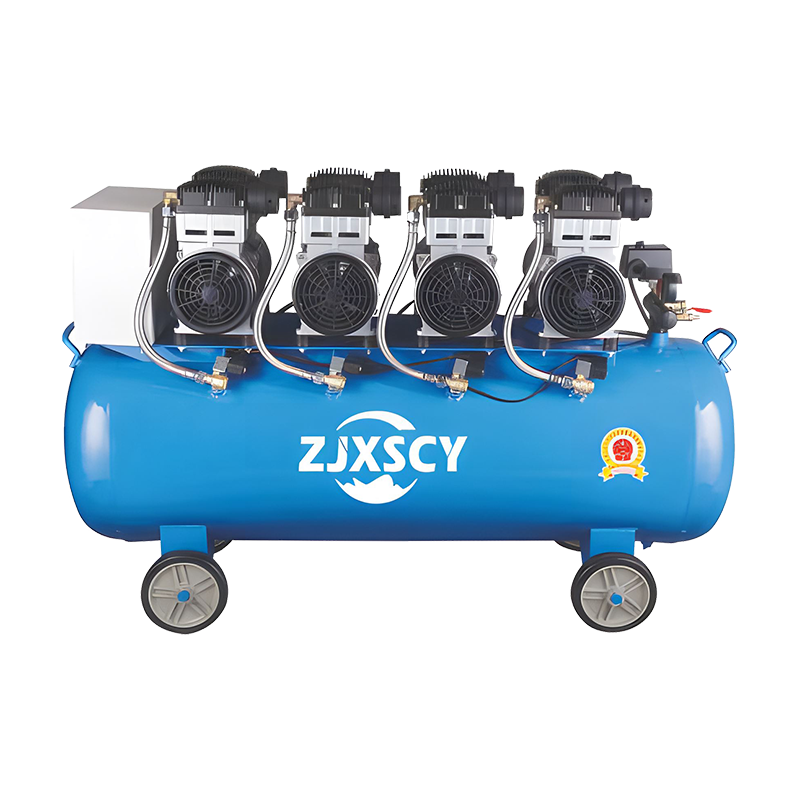
Buying one air compressor for a small workshop is one thing. Buying dozens or even hundreds for a distributor, equipment integrator, or industrial customer is a different situation altogether. If one unit has a problem, it may be manageable. If the same problem appears across an entire shipment, the cost can add up very quickly.
That is why Air Compressor Factory Quality Control deserves close attention during bulk sourcing. Buyers need more than a catalog, a horsepower number, or a basic product description. They need to know whether the compressors can actually deliver the required pressure and airflow, operate safely, and maintain reasonably consistent performance from one production batch to the next.
Depending on the compressor type, factory quality control may include incoming material inspection, machining checks, assembly inspection, electrical testing, pressure testing, airflow measurement, leakage checks, noise and vibration testing, and final inspection. Not every factory will use exactly the same process, but there are several tests worth asking about before placing a large order.
Why Quality Testing Matters More for Bulk Air Compressor Orders
With a bulk order, consistency can be just as important as individual product performance.
A factory might have one compressor that performs well during a demonstration. That doesn't necessarily tell you how the other 50 or 100 units from the same order will perform. Small differences in machining, component quality, wiring, assembly torque, lubrication, or testing can create variations between units.
For B2B buyers, common concerns include:
- Whether every unit meets the agreed specifications
- Whether the factory follows a repeatable inspection process
- Whether important components can be traced
- Whether defects are found before shipment
- Whether test records are available when needed
A useful quality system should therefore be part of production from the beginning, not something added during the final visual inspection.
Incoming Material Inspection Helps Prevent Quality Problems Early
Quality control starts before the compressor is put together.
Depending on the model, factories may inspect motors, air tanks, valves, pistons or rotors, bearings, switches, filters, electrical parts, seals, and other incoming components. The exact inspection list will vary, but critical parts should have some form of verification.
Machined parts deserve particular attention. Incorrect shaft dimensions, poor tolerances, or inconsistent component sizes can lead to alignment problems, vibration, and faster wear.
Electrical components also need checking. The factory may verify part numbers, ratings, insulation characteristics, wiring specifications, and other details against the purchasing requirements.
This kind of incoming inspection can save trouble later. If a component supplier changes a specification without notice, catching the issue before assembly is much easier than finding it after a whole batch has been produced.
Dimensional and Assembly Checks Affect Compressor Reliability
An air compressor has many parts that have to fit and work together within certain tolerances.
During assembly, factory inspectors may check dimensions, clearances, fastening conditions, component orientation, and connections. Threaded joints and important fasteners also need proper assembly control. A loose or incorrectly tightened connection can eventually lead to leakage, vibration, or mechanical problems.
For reciprocating compressors, piston and cylinder dimensions can affect efficiency and wear. In rotary or screw compressors, rotor alignment and internal clearances become especially important.
This is one reason appearance alone doesn't tell you much about internal quality. A compressor can look clean and well finished while still having a problem inside.
Pressure Testing Verifies the Compressor's Working Capability
Pressure testing is one of the basic checks for an air compressor.
A finished unit should be checked against its specified operating pressure and other relevant performance requirements. Depending on the design, the factory may also measure how quickly the compressor reaches the target pressure and whether it can maintain that pressure under defined conditions.
For bulk orders, buyers should ask how the pressure test is performed and what conditions are used.
Important data may include:
| Test item |
What it helps verify |
| Rated pressure |
Whether the compressor reaches its specified working pressure |
| Pressure build-up time |
Basic performance and system efficiency |
| Pressure holding |
Possible leakage or valve problems |
| Automatic start/stop |
Control system performance |
| Safety valve operation |
Protection against excessive pressure |
| Final pressure test |
Consistency of finished units |
The actual acceptance values should be based on the agreed product specification and the requirements of the intended application.
Airflow Testing Shows Whether Capacity Matches the Specification
Pressure is only part of the story. Buyers also need to know how much compressed air the machine can actually deliver.
A compressor may reach the stated pressure but still provide less usable airflow than the application requires. That can become a problem when the compressor is connected to pneumatic tools, production equipment, or another continuous-use system.
Factories can measure airflow under controlled conditions, with the exact method depending on the compressor type and applicable standards. ISO 1217, for example, is commonly associated with performance testing for displacement compressors.
For buyers, asking “What is the CFM?” isn't quite enough. It is also important to ask how that number was measured.
Airflow can change with pressure, temperature, inlet conditions, measurement equipment, and the compressor configuration. A useful factory test report should therefore state the conditions behind the reported result.
Leakage Testing Can Catch Problems That Visual Inspection Misses
Compressed air systems don't have much room for leakage.
Leaks can occur around fittings, valves, hoses, seals, threaded connections, tank interfaces, and other joints. A small leak might not look serious during inspection, but over continuous operation it can increase energy use and reduce the amount of air available to the equipment.
Factories may check for leakage by pressurizing the system and monitoring pressure loss or by using another suitable leak-detection method.
This is especially important when buying complete compressor systems. The buyer is not only purchasing an air compressor element. They expect the finished unit, including its connections and related components, to work as a complete package.
Electrical Safety Tests Matter for Electrically Driven Compressors
For electric air compressors, electrical testing is another important part of factory QC.
Depending on the design, checks may include wiring, grounding continuity, insulation-related testing, motor operation, controller functions, and protective-device operation.
The factory should also make sure the electrical configuration matches the actual order. This becomes particularly important for export products because voltage, frequency, plug type, and control requirements can vary between markets.
For a bulk shipment, consistency matters here too. One unit with the wrong voltage or wiring configuration can create a very different problem from a simple cosmetic defect.
Noise and Vibration Tests Help Assess Operating Quality
Some noise and vibration are normal for an air compressor. Excessive levels, however, may point to a mechanical or assembly problem.
A factory may run the compressor under controlled conditions and check sound level or vibration behavior. The acceptable range depends on the model and where the compressor will be used.
Vibration can be affected by:
- Motor alignment
- Rotor or crankshaft balance
- Bearing condition
- Mounting structure
- Fastener tightness
- Moving-part tolerances
Noise testing can be especially useful for compressors used in workshops, laboratories, dental equipment, indoor machinery, or other locations where sound levels matter.
Buyers should also ask about the measurement method. Sound readings can change depending on the distance, room, operating pressure, and test equipment.
Temperature Testing Helps Identify Thermal Problems
Heat is another issue that shouldn't be ignored.
Compression and mechanical movement naturally generate heat. If temperatures become too high, lubricant, seals, motor components, valves, and other parts may be affected.
A factory may run the compressor for a defined period and monitor temperatures at several points. Depending on the model, this could include discharge temperature, motor temperature, oil temperature, or other operating values.
Thermal testing can be useful for bulk buyers because a compressor may look fine during a short demonstration and still develop a temperature problem during longer operation.
Endurance Testing Can Reveal Problems Before Shipment
Not every compressor needs an extensive endurance test on every single unit. For models intended for demanding industrial applications, however, longer operating tests can provide useful information.
A factory may run selected units for a specified period while monitoring pressure, temperature, current, vibration, noise, and other operating conditions.
This can uncover problems that a short functional test may miss, such as:
- Gradual temperature increase
- Abnormal bearing noise
- Repeated pressure-control faults
- Seal leakage
- Electrical overheating
- Lubrication problems
For larger orders, buyers can ask whether endurance testing is performed on every unit, selected samples, or units from each production batch.
Final Inspection Confirms the Compressor Is Ready to Ship
Once functional testing is finished, the final inspection checks whether the product actually matches the order.
Inspectors may check the model number, nameplate, accessories, packaging, electrical configuration, fittings, manuals, labels, and overall appearance.
Packaging is worth checking too. Compressors can be exposed to impact, vibration, moisture, and rough handling during transportation. Good packaging helps protect a machine that has already passed factory testing.
Ideally, the final inspection checklist should be based on the customer's approved specification or purchase order. That keeps the production and QC teams working from the same requirements.
Which Tests Should B2B Buyers Prioritize?
The exact testing program depends on the compressor and its application. Still, several areas are commonly worth checking during supplier evaluation.
| Priority area |
Key checks |
Why buyers should care |
| Performance |
Pressure, airflow, operating cycle |
Confirms the main specification |
| Leakage |
System and connection checks |
Helps prevent performance loss |
| Electrical |
Wiring, grounding, motor operation |
Reduces installation and safety issues |
| Mechanical |
Dimensions, fastening, alignment |
Supports consistent assembly |
| Thermal |
Operating temperature |
Helps identify overheating risks |
| Noise & vibration |
Controlled operating checks |
Relevant to equipment environment |
| Safety |
Protection and pressure-control devices |
Supports safe operation |
| Final QC |
Model, accessories, packaging |
Confirms shipment accuracy |
Buyers don't necessarily need every available test on every compressor. A more practical approach is to identify the parameters that matter to the application and include those requirements in the purchase specification.
How Buyers Can Evaluate a Factory's Quality Control Process
When comparing air compressor factories, don't stop at statements like “strict quality control.” Ask how the process actually works.
Useful questions include:
“Which tests are performed on every finished unit?”
“What parameters are recorded?”
“How are defective units identified and handled?”
“Are the test instruments calibrated?”
“Can batch inspection records be provided?”
“Which incoming components are inspected?”
“Are sample endurance tests performed?”
The answers can tell you quite a bit about how the factory manages production.
A supplier should be able to explain the basic flow, from incoming material inspection and assembly to functional testing, final QC, and shipment.
Quality Documentation Is Important for Bulk Procurement
Test records can be useful when several companies are involved in a B2B supply chain.
A distributor may need to confirm that received units match the approved sample. An equipment integrator may need performance information for its own system documentation. A procurement team may need records during supplier reviews.
Depending on the project, useful documents can include inspection reports, performance test records, material information, electrical test records, calibration details, and product specifications.
It is better to agree on the required documents before production starts. Otherwise, the order may be finished before anyone realizes that a particular test record was never collected.
Building a Consistent Quality Standard for Bulk Orders
For bulk purchasing, quality requirements should be measurable.
Instead of simply asking for a “high-quality air compressor,” buyers can define requirements for pressure, airflow, electrical configuration, noise, operating temperature, accessories, packaging, and inspection.
The factory can then use these requirements as the basis for production and testing.
For repeat orders, consistency becomes even more important. If the factory changes a motor supplier, control component, material, or manufacturing process, the buyer should know when that change could affect compressor performance.
Choosing an Air Compressor Factory for Long-Term Supply
Air Compressor Factory Quality Control isn't just about checking a finished compressor for a few minutes before it goes into a box. It covers the whole production process, from incoming components and machining through assembly, performance testing, electrical checks, and final packaging.
For bulk buyers, pressure and airflow are important starting points, but they aren't the only things worth checking. Leakage, electrical safety, temperature, vibration, noise, endurance, and batch consistency can all affect the actual value of a compressor order.
A factory that can clearly explain its testing procedures, test conditions, acceptance requirements, and quality records gives B2B buyers something much more useful than a general quality claim. Before placing a large order, it's worth putting the important test requirements into the technical specification and confirming exactly how the factory will check them during production.




 English
 русский
 Español