Parameters:Key Features
1. Fast, snap-on action
The quick-connect sleeve means you aren't wasting time spinning threads onto a live service port. You just pull back the collar, click it into place, and you're hooked up. When the shop is backed up and you're bouncing between two or three cars, skipping that extra wrenching speeds up your whole shift.
2. Keeps expensive gas inside the lines
The internal ball bearings lock onto the port ring tight, preventing the connection from leaking or blowing off mid-charge. It gives you a solid seal that stops freon from venting into the garage, saving you from tracking down mysterious line drops or wasting material.
3. Fits standard models rolling into your shop
The machining matches standard vehicle service ports, so you don't need a drawer full of different adapters just to check a car's climate control loop. It handles most standard cars, trucks, and SUVs that come across your bays, keeping your toolkit un-cluttered.
4. Built to take a beating on a garage floor
We used thick brass or hard metal castings for the body because cheap plastic stuff just snaps the second a heavy tool bag lands on it. It handles the oily mess of a daily repair environment and constant click-on cycles without stripping or losing its shape.
5. Keeps freezing gas out of your face
Pressurized refrigerant can go sideways real quick if your fittings don't hold back the pressure. The internal valving is set up to open only after the coupler is locked down, lowering the risk of a blast of freezing liquid hitting your knuckles or eyes.
6. Gets you through your tickets quicker
By cutting out the hassle of fussy connections, you get your manifold gauges hooked up right out of the gate. Less time fiddling with a sticky line means you can move onto the next vehicle faster, keeping your daily bay productivity high.
Components of the Set
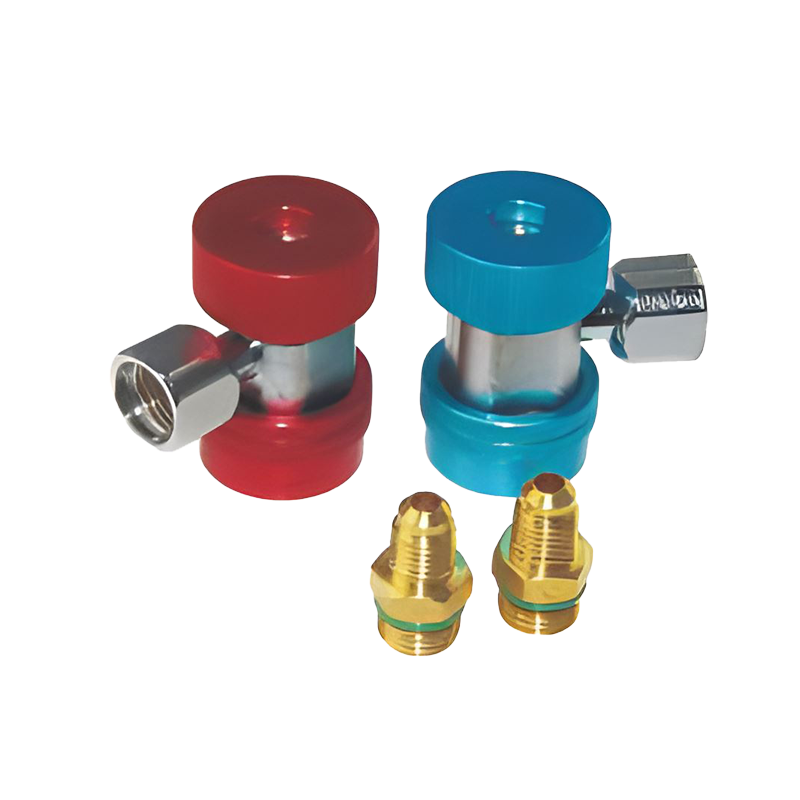
1. High-Side Coupler
This is the red-coded fitting built to snap onto the vehicle's high-pressure line. It features a heavy-duty sleeve layout that takes the brunt of the discharge pressure without flinching or popping loose.
2. Low-Side Coupler
The blue-coded fitting designed for the low-pressure suction side of the system. It receives the vehicle's port adapter smoothly and uses a deep collar to hold onto a reliable, tight fit during evacuation or charging.
3. Reinforced Charging Lines
The thick rubber hose gives you plenty of slack and flexibility between the fittings. It's tough enough to take sudden pressure spikes and resists getting brittle or cracking when it touches freezing freon.
4. Spare Gaskets and O-Rings
Nothing lasts forever when dealing with corrosive oils, so the kit packs extra rubber seals. When a fitting starts weeping down the road, you can just pick out the old seal and pop a new one in right at your bench.
5. Hard Plastic Storage Case
Everything drops into a blow-molded case that actually stays shut. Instead of letting your couplers roll around at the bottom of your cart, it keeps your lines and brass pieces clean and easy to find when you're on a run.
Applications
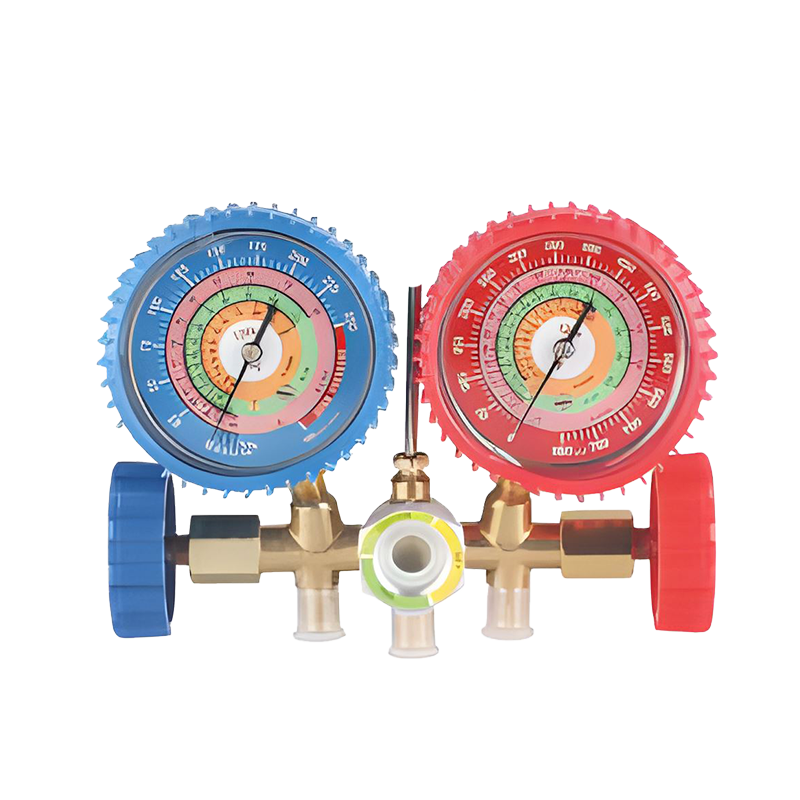
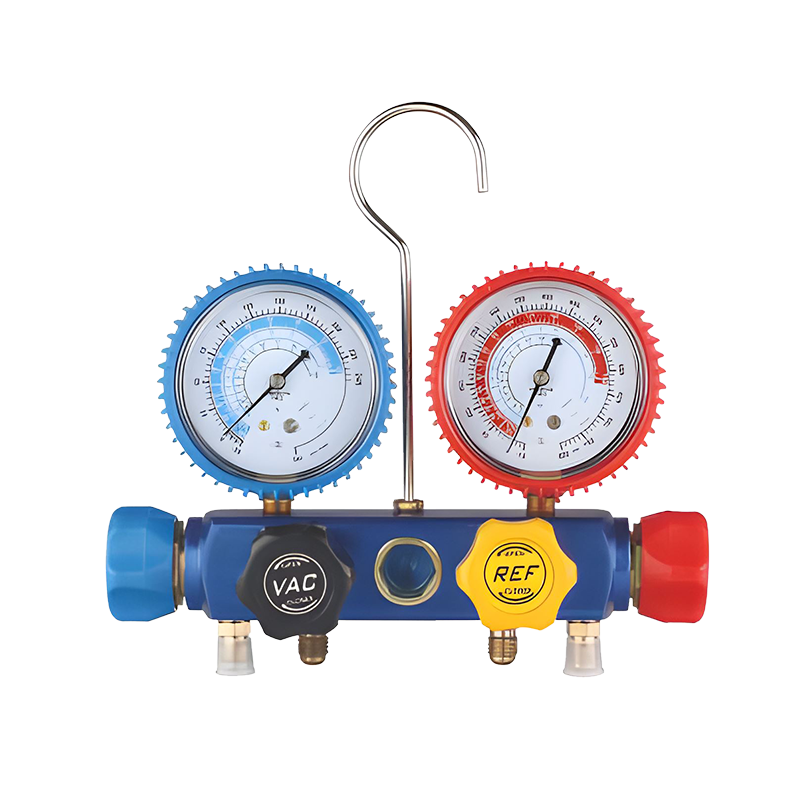
- Pressure Diagnostics: Essential for connecting your manifold block to check high and low-side numbers, allowing you to spot a weak compressor or a blocked expansion valve.
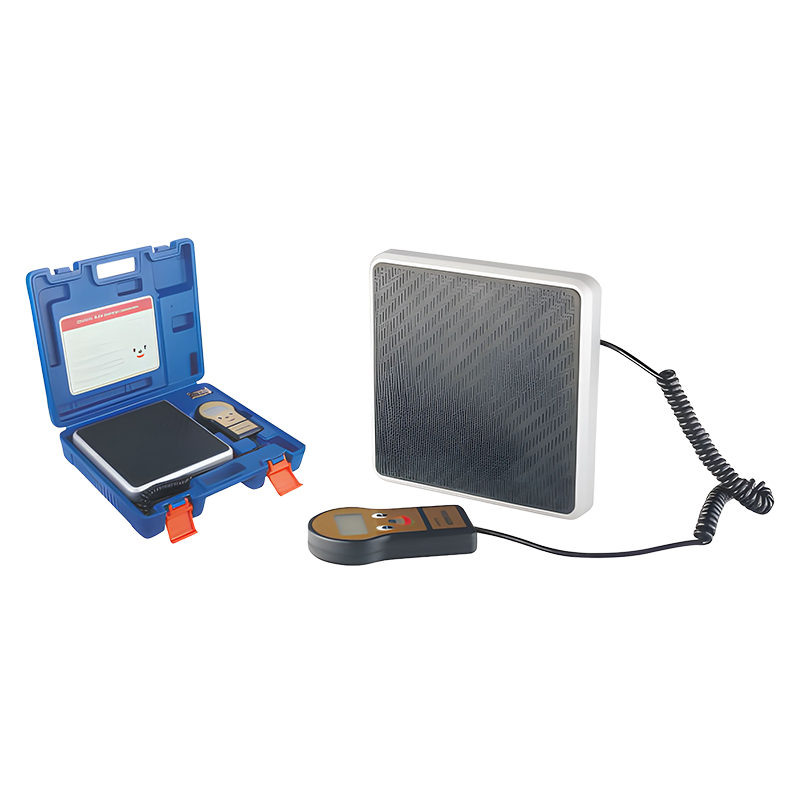
- System Recharging: Allows you to hook up your scale and freon bottle directly to the car's suction port, bleeding in the exact charge your under-hood sticker calls for without using specialty tools.
- Tracking Down Sneaky Leaks: Works hand-in-hand with ultraviolet dyes or electronic sniffers, keeping the lines pressurized so you can find where the system is weeping fluid.
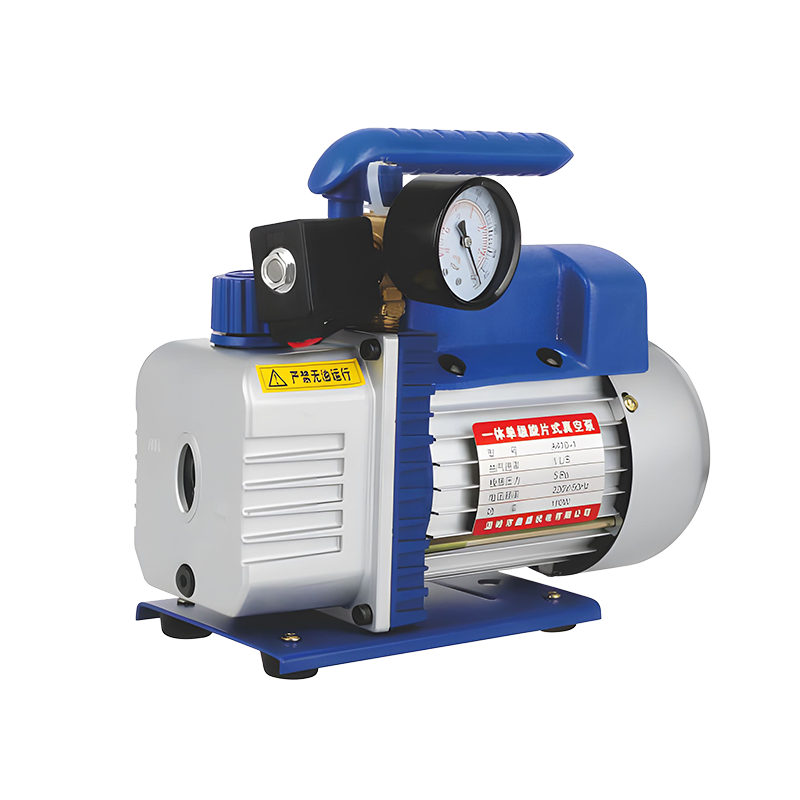
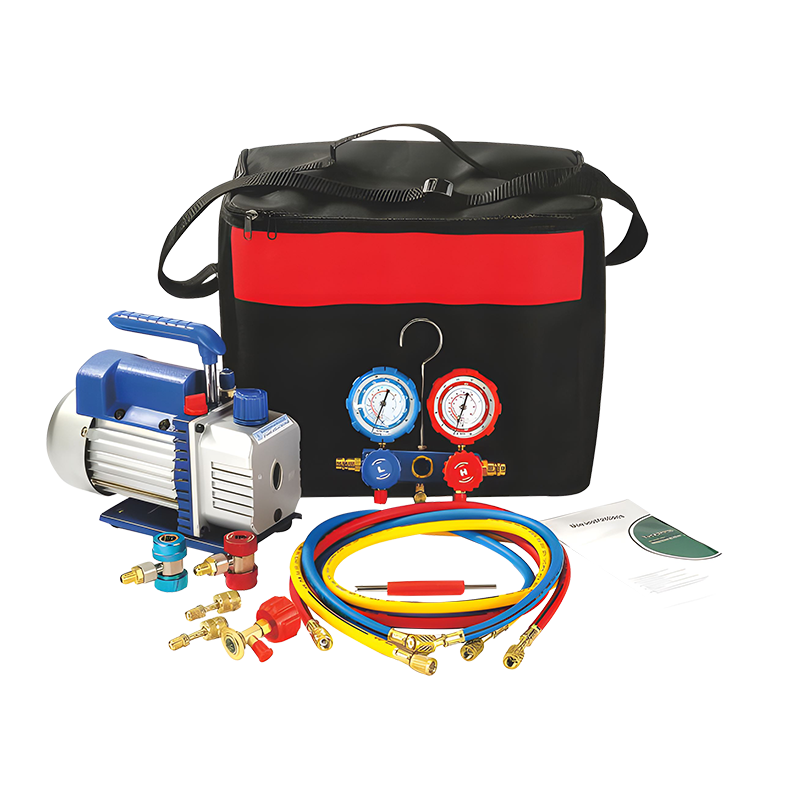
- Clearing Out Moisture: Gives your vacuum pump line a secure connection to hold a deep pull, ensuring all hidden air and moisture are boiled off before you release the gas.
- Reclaiming Old Refrigerant: Vital for hooking up your recovery machine to suck out old gas before cracking open a line, keeping your shop compliant with venting laws.


 English
 русский
 Español