Oct 16, 2026
Modern heat pumps move heat around by circulating refrigerant through a closed loop. The compressor and the heat exchangers do the heavy lifting, but the smaller parts matter too. They keep the refrigerant clean, steer the flow, protect the equipment, and keep an eye on pressure. Pick the wrong ones, or let them wear out, and you can end up with lower capacity, higher energy bills, or a system that breaks down when you need it.
What works in one system may not work in another. The choice depends on the refrigerant, the design, the pressure, and the temperature range you're dealing with.
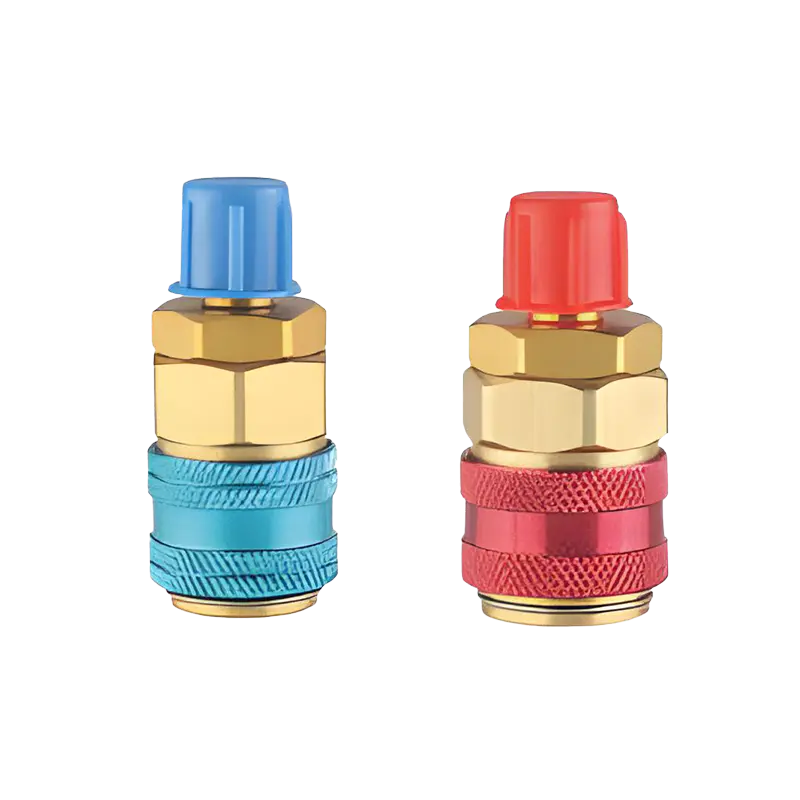
You'll run into the usual suspects: filter-driers, expansion valves, suction accumulators, liquid receivers, solenoid valves, check valves, oil separators, and pressure sensors. Not every heat pump needs all of them—the circuit design decides what goes in.
Because flow reverses between heating and cooling, each accessory has to play nice with the refrigerant, the operating range, and the direction of flow. A part that doesn't match up can choke the circulation or mess with the control logic.
A filter-drier pulls moisture out and traps certain particles. Moisture can feed corrosion or trigger unwanted reactions between the refrigerant and the oil. Dirt and metal bits, meanwhile, love to jam up the narrow passages inside expansion valves.
A well-matched unit helps shield the sensitive stuff downstream. But go undersized, let it saturate, or leave it contaminated, and you're looking at extra pressure drop. On reversible systems, the model and the piping also have to suit the direction the flow actually takes.
When you're picking one, check refrigerant compatibility, moisture capacity, flow rating, connection size, and working pressure. Clean tubing, careful brazing, and a proper evacuation matter just as much—no filter-drier can rescue a sloppy install.
Thermostatic expansion valves (TXVs) and electronic expansion valves (EEVs) meter how much refrigerant reaches the evaporator. That's what lets the heat pump react when the outdoor temperature shifts or when your heating and cooling demand changes.
An EEV reads its sensors and steps the flow in small increments, which suits inverter-driven systems where the compressor speed is on the move. Size it wrong, let it get dirty, feed it bad sensor data, or set it poorly, and superheat goes unstable—heat transfer drops, energy use creeps up, and liquid refrigerant can end up at a compressor that was built for vapor.
The valve has to match the refrigerant, the capacity, the pressure range, and the control method in both heating and cooling.
A suction accumulator splits liquid out of the suction stream to guard a compressor that's meant to breathe vapor. Depending on how it's built, it dribbles refrigerant and oil back at a controlled rate. That comes in handy at startup, during defrost, or when the load swings.
A liquid receiver does something else. It holds on to liquid refrigerant and helps balance how much is available as conditions change. Some designs use one; others don't bother.
Don't treat them as swappable. The accumulator shields the compressor from liquid slugging, while the receiver manages the refrigerant charge sitting in the loop. Neither one excuses a proper charge-up or skips the safeguards the manufacturer calls for.
Solenoid valves open or close a passage when they get power. Check valves let flow go one way and block the other. Put them in the right spots, and refrigerant gets routed through a reversible heat pump the way it was meant to.
A stuck, backwards, or undersized valve chokes the flow and drags down heating or cooling output.
Pressure sensors and switches support monitoring, control, fault detection, or a shutdown when pressure wanders outside the allowed window. They have to suit the refrigerant and be installed right. Technicians often need temperature, compressor speed, operating mode, and airflow data to make sense of a pressure reading.
When they're sized right and looked after, accessories let the system run steadily. Dirt, wear, or too much pressure drop, though, push energy use up and invite more maintenance.
| Refrigerant accessory | Primary function | Effect on heat pump performance |
|---|---|---|
| Filter-drier | Pulls moisture out, catches particles | Helps keep contamination and blockages away |
| TXV or EEV | Meters refrigerant flow | Helps keep the evaporator stable and heat transfer up |
| Suction accumulator | Limits liquid coming back to the compressor | Cuts the risk of liquid-related compressor damage |
| Liquid receiver | Stores liquid refrigerant | Helps balance refrigerant inventory in suitable designs |
| Solenoid valve | Opens or closes a flow path | Supports sequencing and flow control |
| Check valve | Blocks reverse flow | Helps keep the refrigerant on its intended route |
| Pressure sensor | Measures circuit pressure | Supports monitoring and system protection |
Every accessory adds some resistance, so check the pressure drop across the range you actually run in. Yanking out a required part to cut resistance just trades efficiency for weaker protection or control.
A good part still causes grief if it goes in backwards, gets contaminated, or runs past its rating. During commissioning, check orientation, connections, refrigerant compatibility, and what the manual says. Run both heating and cooling, and don't forget defrost where that applies.
Warning signs show up as odd pressure, wandering superheat, restricted flow, leaks, or a compressor that's acting strange. Since a bunch of faults can point the same way, look at the whole system before you swap a part.
Keep a record of leak repairs, filter-drier swaps, recurring faults, and how performance changes. Leave refrigerant and circuit work to qualified people with the right tools and safety procedures.
Choose accessories as part of the system design, not as an afterthought. Factor in refrigerant type, capacity, working pressure, temperature range, pressure drop, flow direction, and how the thing gets controlled.
Modern heat pumps swing their output across wide outdoor temperature ranges, so the accessories have to hold up at partial load and higher load, including the heating, cooling, and defrost transitions where those exist.
Manufacturers and contractors should go over the specs and verify performance during commissioning. Building owners can book inspections and chase down unusual operating data sooner rather than later.
Done right, the accessories keep refrigerant clean, steer the flow, watch the pressure, and shield the parts that cost real money to fix. Thoughtful design, a careful install, and steady upkeep go a long way toward keeping a heat pump on the job for the length of its service life.
Related Products

Chengbei Industrial Zone, Xinhe Town, Wenling City, Zhejiang Province, China
Copyright © Wenling Xinsheng Mechanical and Electrical Co., Ltd. All Rights Reserved.



 English
 русский
 Español