Details:Product Advantages
1. Numbers you can actually trust
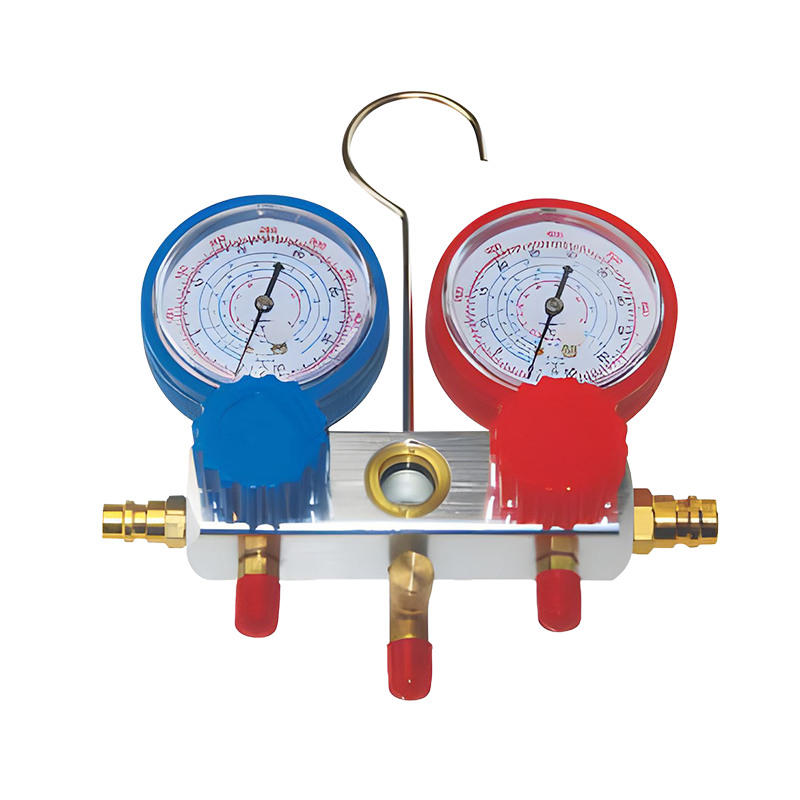
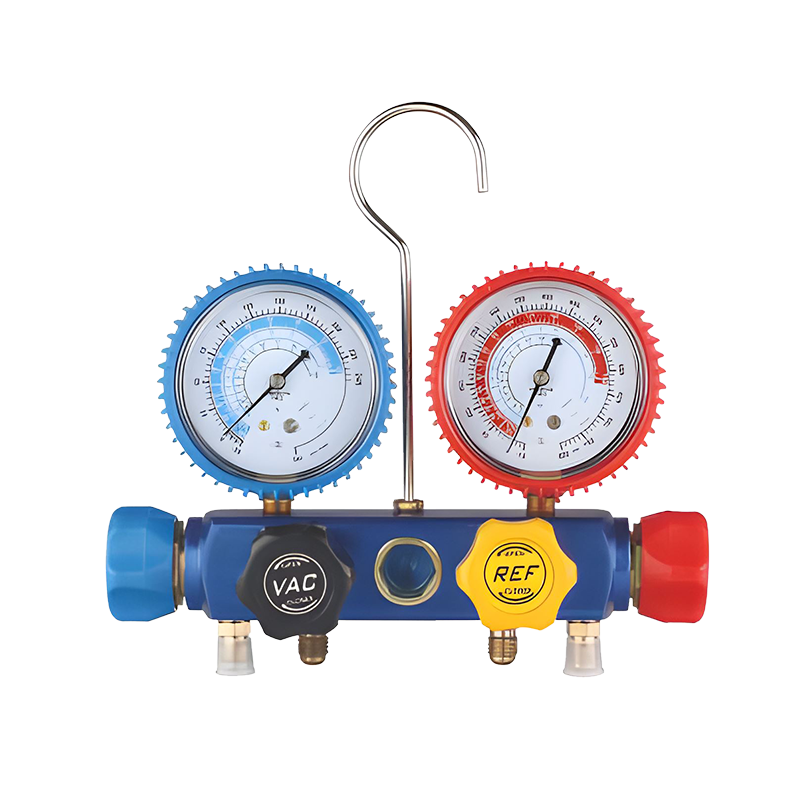
The whole point of dragging a manifold out to a unit is getting a straight answer on line pressures. These dials are calibrated properly so you aren't guessing whether you're looking at a restriction or just a low charge, which saves you a lot of back-and-forth when troubleshooting.
2. Takes a beating in the back of the truck
We used real brass and solid metal castings for the block because plastic stuff just snaps when it rolls around with heavy wrenches. It handles the wet, muddy conditions of outdoor condensers and won't corrode or strip out after a few hard seasons.
3. Dials are easy to read at a glance
The face markings are clean and large enough that you don't have to squint when you're stuck in a dark crawlspace or working under direct sunlight. It lets you check your pressures and temperatures quickly without overcomplicating things.
4. Everything you need is in the box
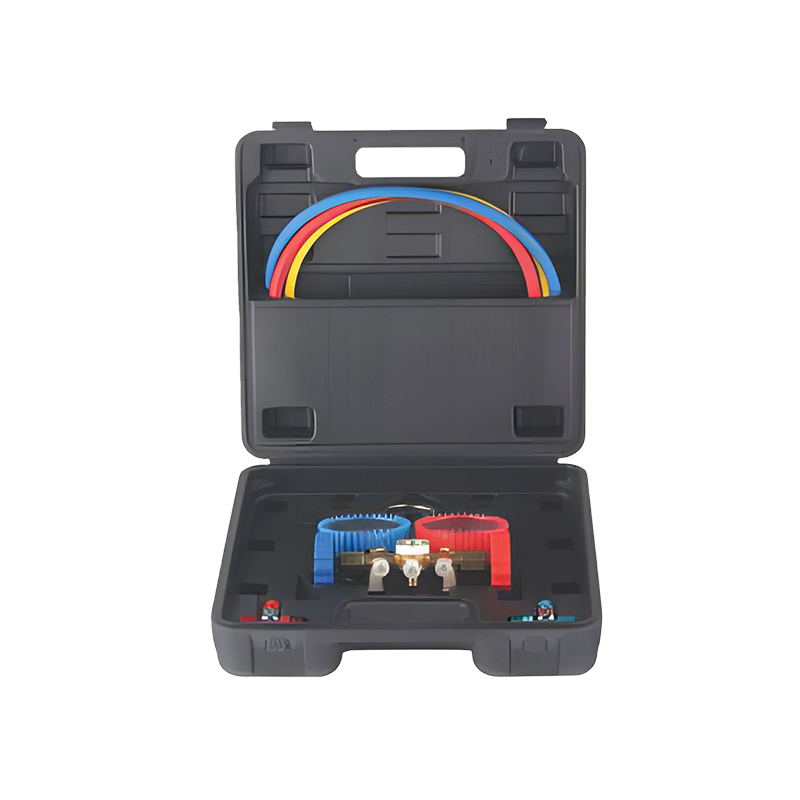
Instead of making you buy lines separately, this comes as a full kit with the three-color hose set and a heavy hanging hook. The hoses have decent flexibility so they don't kink up when it's freezing cold, and the hook is thick enough to hold the manifold steady on a unit frame.
5. Keeps things from blowing up
Pressurized gas is nothing to mess with, so the manifold block includes built-in relief points. If you accidentally hook up to a line that's way over pressure, the gauge setup helps prevent a dangerous blowout on your bench or in your face.
6. Plays nice with different gases
The manifold isn't a one-trick pony. The pressure scales are mapped out to handle a bunch of different common refrigerants, meaning you can swap the same manifold from a house A/C over to a commercial walk-in box without switching gear.
7. Stops you from wasting expensive gas
Because the needle response is steady, you can dial in your superheat and subcooling numbers without accidentally dumping extra refrigerant into the system or pulling a vacuum too early, which saves time and keeps material waste down.
8. Checks out with industry specs
The gauges are engineered to match up with regular trade standards for high and low-side pressures. You can use them on official inspection jobs knowing your readouts are fully compliant with safe working limits.
9. Grippy valves you can turn with oily hands
The knobs on the manifold body have a chunky, contoured shape. If your gloves are covered in compressor oil or refrigerant dye, you can still get enough leverage to open or choke down the lines without slipping.
10. Simple to rebuild when seals wear out
Nothing lasts forever, but this block is easy to take apart. The internal gaskets, O-rings, and valve cores are standard sizes, so when a line starts weeping down the road, you can just swap the seals instead of buying a whole new manifold.
Applications
- Residential and Commercial A/C: Essential for hooking up to split systems or rooftop packages to check charge levels, vacuum down lines, or pump down a circuit for a compressor swap.
- Supermarket and Restaurant Boxes: Used by commercial fridge techs to keep walk-ins, reach-ins, and ice machines running cold so inventory doesn't spoil.
- Heat Pump Maintenance: Helps you diagnose reversing valve issues or check pressures when the system shifts between heating and cooling cycles.
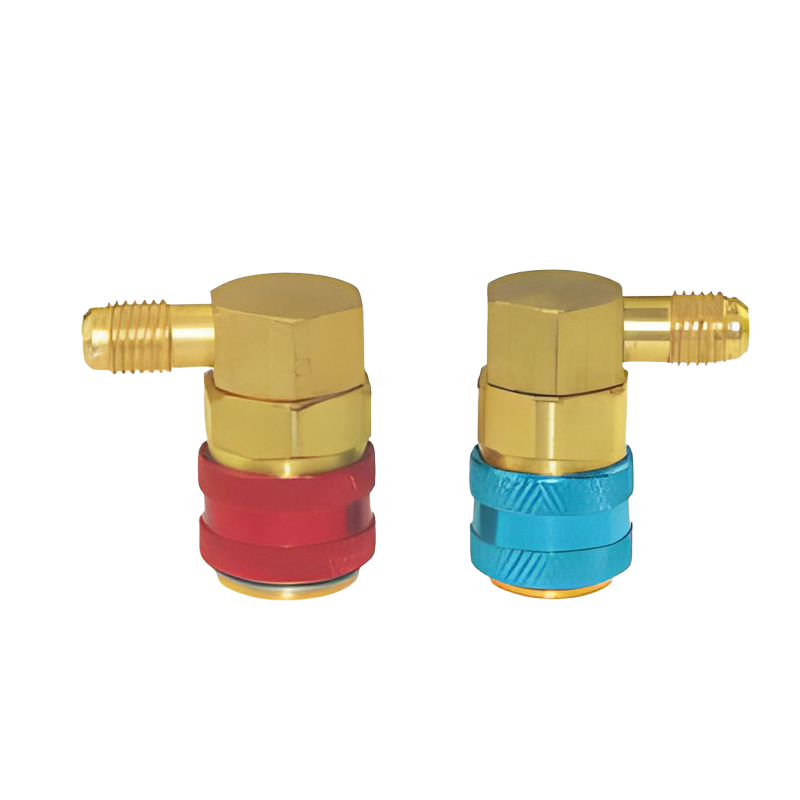
- Car and Truck Air Conditioning: Handy for automotive mechanics who need to attach to manifold ports and track pressures during a dashboard A/C recharge.
Conclusion
When you look at the daily routine of a service tech, a solid manifold set is just non-negotiable gear. It gives you the accuracy you need so you aren't misdiagnosing equipment, and the heavy brass build means it won't quit on you mid-job. Getting a dependable tool on your side simply makes your charging and recovery cycles go by a lot faster, keeping your service calls profitable and your customers happy because their vents are actually blowing cold air again.


 English
 русский
 Español