Jun 05, 2026
Your system is pulling vacuum inconsistently, cycle times are longer than they should be, and the maintenance team is fielding complaints about pressure stability that never quite resolves. For engineers and procurement teams evaluating vacuum equipment, this kind of performance gap tends to point back to one question: is the pump design actually matched to the application? Working with a qualified rotary vane vacuum pump supplier is often where that assessment begins — because the operating principle of this pump category has genuine, well-documented advantages in industrial contexts, and understanding those advantages is the practical starting point for equipment selection.
The operating principle is mechanical rather than dynamic, which is a key reason this design performs differently from other vacuum pump categories.
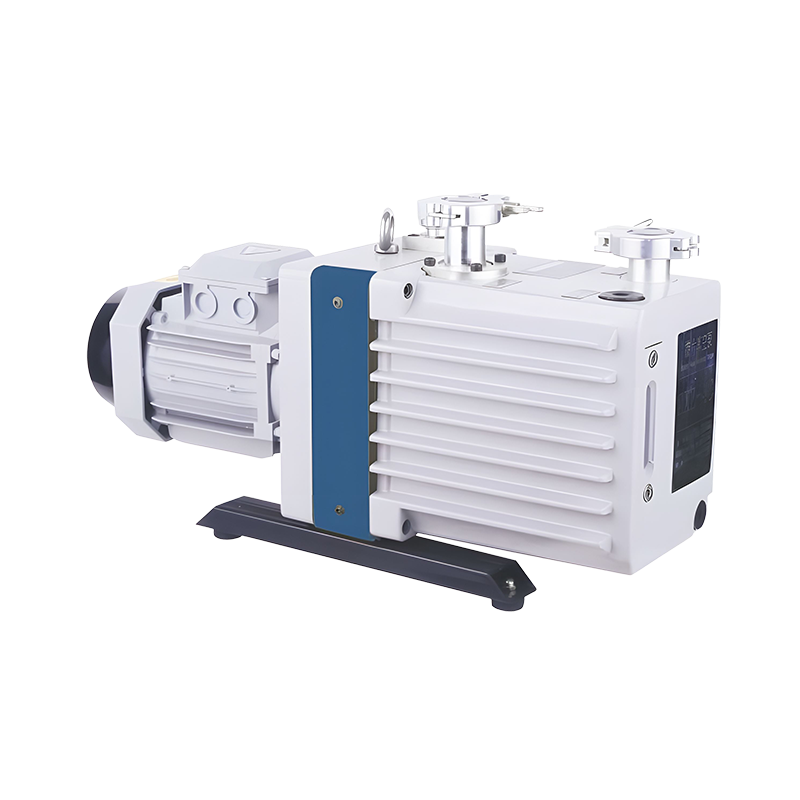
Inside the pump body, a slotted rotor turns off-center within a cylindrical chamber. Vanes — flat rectangular blades — sit inside the rotor slots and extend outward against the chamber wall by centrifugal force and spring pressure. As the rotor turns, the spaces between adjacent vanes change volume continuously. Gas drawn in through the inlet gets trapped in these spaces, compressed as the volume decreases, and discharged through the outlet.
What this creates operationally:
The result is a pump that suits applications where vacuum stability matters more than peak depth — which covers a substantial portion of industrial and HVAC use cases.
Efficiency in vacuum system terms has two dimensions: how well the pump maintains its target vacuum level under real operating loads, and how much energy and maintenance overhead it consumes to do so. Rotary vane designs perform well on both.
On the performance side, the continuous displacement mechanism avoids the pressure fluctuations that piston-type pumps introduce through their reciprocating cycle. In applications sensitive to vacuum stability — such as pick-and-place handling, packaging sealing lines, or refrigerant recovery — those fluctuations have direct effects on process quality. Removing them is not a minor benefit.
On the efficiency-cost side, the design has relatively few moving parts and a straightforward lubrication system. Oil-sealed versions circulate oil through the pump to seal the vane-to-wall gap, remove heat, and carry away small amounts of condensate. When the oil is maintained properly, internal wear proceeds slowly. The vanes themselves are replaceable without full pump teardown, which keeps service costs manageable over extended operating periods.
Two factors that are sometimes underweighted in efficiency comparisons:
Both configurations use the same rotating vane principle, but they differ in how deeply they can pull vacuum and what applications they are suited for.
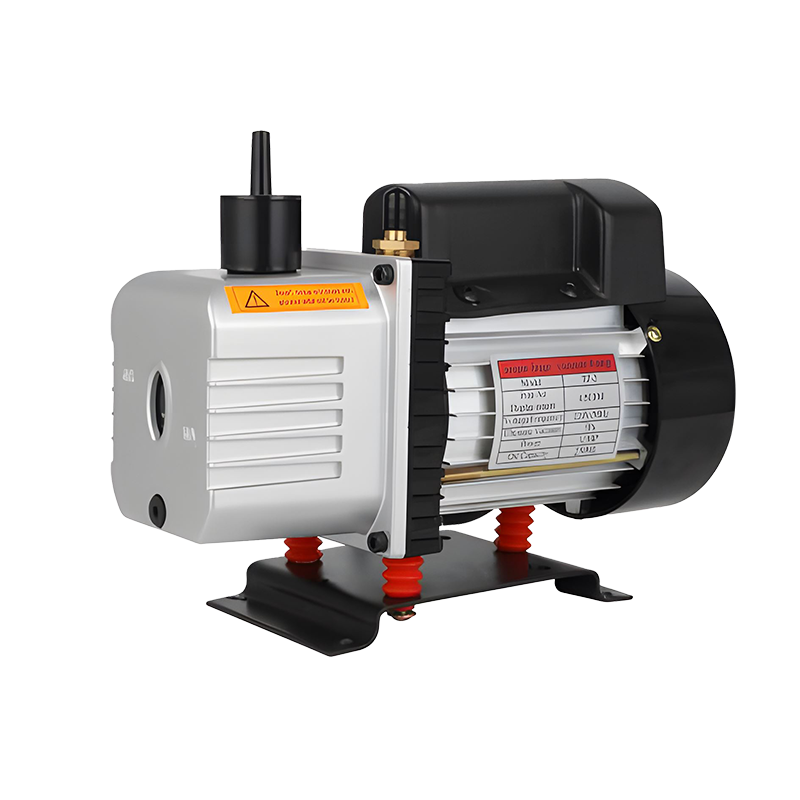
A single stage vacuum pump passes gas through one compression stage before discharge. It is well-suited to applications that need moderate vacuum levels — HVAC service, light industrial packaging, vacuum forming, and pneumatic conveying systems. The design is straightforward, less expensive, and sufficient for a wide range of industrial demands.
A two-stage version routes gas through a second compression stage before it reaches the outlet. This allows the pump to achieve substantially deeper vacuum levels, which matters in applications like refrigeration system evacuation, degassing processes, and laboratory or analytical equipment support.
Comparing them directly:
The selection between them should be driven by the actual vacuum level the process requires — not by a general preference for one over the other. Specifying a two-stage unit where a single stage would perform adequately adds cost without adding value. Specifying a single stage in an application that genuinely requires deeper vacuum produces a system that cannot meet its process requirements.
Different applications place different demands on vacuum equipment, and matching pump characteristics to those demands is where selection becomes consequential.
HVAC and refrigeration service:
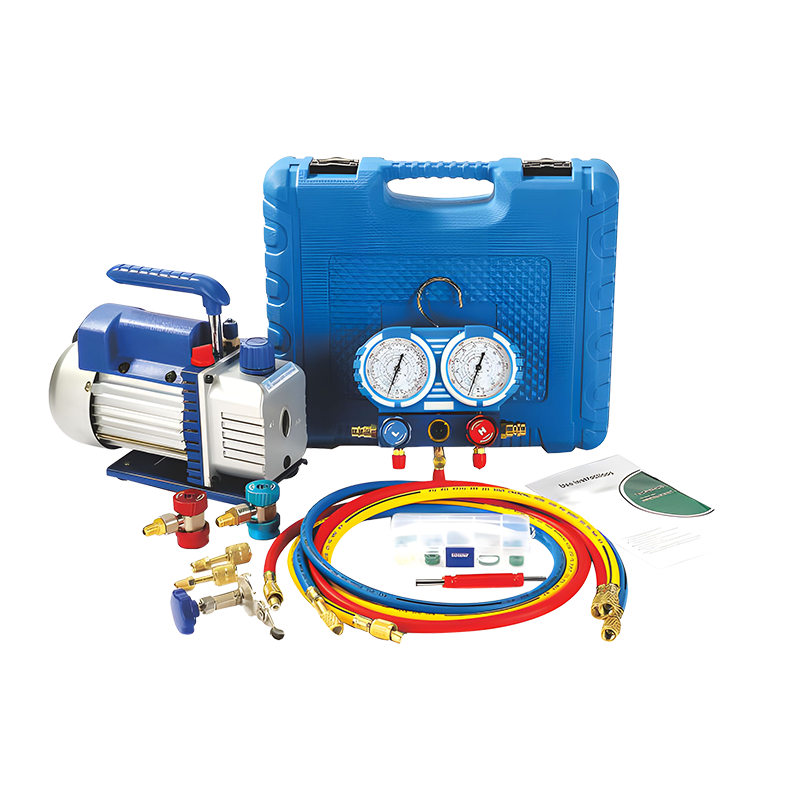
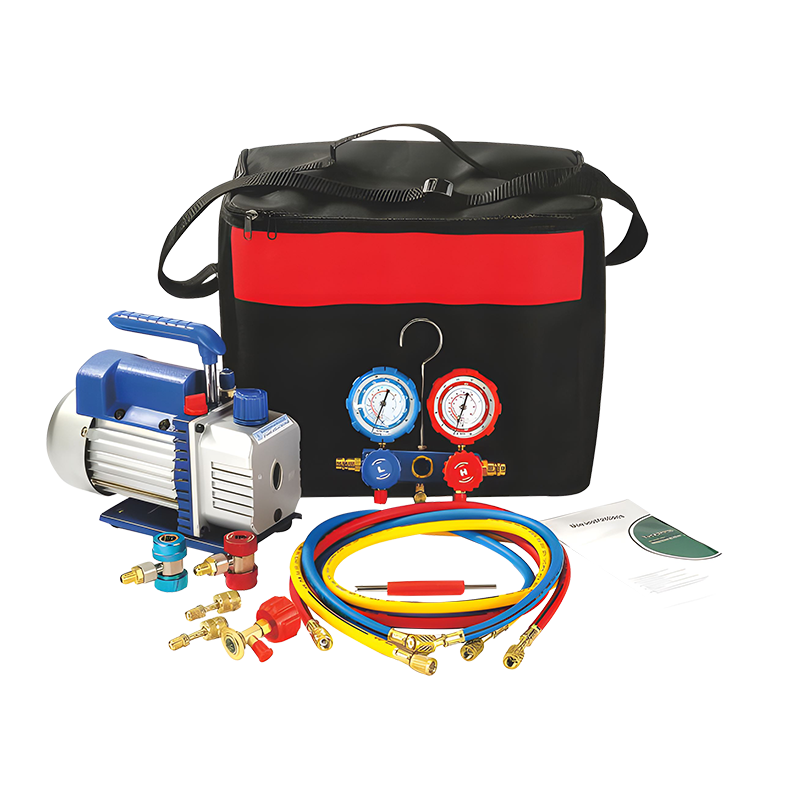
Vacuum pump for air conditioning service applications requires a pump that can pull down refrigerant circuits to the level needed for moisture removal before charge. The rotary vane design is widely used in this context because it handles the mixed gas environment during evacuation effectively, reaches the required vacuum depth with a standard two-stage unit, and is portable enough for field service work.
Industrial packaging:
Continuous vacuum forming and modified-atmosphere packaging lines need stable, repeatable vacuum levels across sustained production runs. Pump designs that introduce cyclic pressure variation cause seal inconsistency in packaging lines. The continuous displacement behavior of the rotary vane type avoids this problem directly.
Printing and graphic arts:
Sheet-fed and web-fed printing equipment uses vacuum to hold media in position during processing. Stability matters here — a vacuum level that drifts during a press run affects registration and print quality. The steady output of oil-sealed rotary vane pumps suits this requirement well.
Plastics processing:
Vacuum degassing of resins and adhesives, and vacuum forming of sheet materials, both require pumps that can hold a steady level over the duration of a process cycle. Variability in vacuum level during degassing produces inconsistent material properties in the finished product.
Medical and laboratory support:
Filtration, aspiration, and degassing in clinical and analytical environments require clean, stable vacuum. Oil-free rotary vane variants are available for applications where hydrocarbon contamination from oil mist would affect the process or the analytical result.
| Application | Vacuum Level Required | Recommended Configuration | Key Performance Factor |
|---|---|---|---|
| HVAC and refrigeration evacuation | Deep vacuum | Two-stage oil-sealed | Moisture handling, depth of pull |
| Industrial packaging lines | Medium vacuum | Single-stage oil-sealed | Stability under continuous load |
| Printing and media handling | Medium vacuum | Single-stage oil-sealed | Low pressure variation |
| Plastics degassing | Medium to deep | Single-stage or two-stage | Consistent vacuum level over the process cycle |
| Medical filtration | Medium vacuum | Oil-free variant | Cleanliness, no contamination risk |
| Laboratory analytical support | Medium to deep | Oil-free or two-stage | Stability and cleanliness |
| Pneumatic conveying | Low to medium | Single-stage | Flow volume and low maintenance |
Each row in the comparison reflects a different balance between depth, stability, contamination tolerance, and maintenance profile. No single configuration covers all categories equally — which is why application matching matters before product selection.
A pump that performs well at commissioning but degrades quickly is a different cost proposition than one that holds its performance across a longer service interval. Several factors determine which outcome you get.
Oil condition and change intervals:
Oil-sealed rotary vane pumps depend on oil quality for both sealing efficiency and thermal management. Oil that becomes contaminated with process vapors, acidic byproducts, or water loses its sealing properties and accelerates internal wear. Following the manufacturer's oil change schedule — and using the correct oil grade — is the single maintenance factor with the greatest effect on service life.
Inlet filtration:
Particulate contamination entering through the inlet damages vane surfaces and the chamber bore. Inlet filters sized appropriately for the application environment reduce this wear mode significantly. In dusty or particle-laden industrial environments, filter maintenance is as important as pump maintenance.
Operating temperature:
Sustained operation at elevated ambient temperatures shortens oil service life and increases vane wear rates. Adequate ventilation around the pump installation — or in some cases, auxiliary cooling — protects performance in hot environments.
Vane condition:
Vanes are wear components. They can be inspected and replaced without pump replacement, which is a practical advantage of this design. Running worn vanes degrades both vacuum depth and volumetric efficiency; scheduled inspection at appropriate intervals prevents this from progressing unnoticed.
Exhaust filtration:
Oil mist carried in the discharge stream is recovered through exhaust filters. Clogged exhaust filters increase back pressure, raise operating temperature, and reduce pump efficiency. These filters are inexpensive and often overlooked until a performance problem develops.
Standard catalog configurations cover most industrial applications without modification. But there are genuine cases where a custom vacuum pump — either a modified standard unit or a purpose-built configuration — delivers better outcomes than any off-the-shelf option.
Situations that commonly justify a custom approach:
Working with a vacuum pump factory that carries genuine custom engineering capability changes the procurement dynamic for these cases. It allows the pump specification to be built around the application requirement rather than the application being adapted to fit available equipment. For OEM equipment builders and system integrators, this distinction matters across the full production run rather than just at the prototype stage.
Finding a supplier who can deliver the right specification is a different process from finding one who simply offers the lowest unit price. The factors worth evaluating before committing to a source:
The broader point is that a supplier relationship for vacuum equipment is not transactional in the same way that commodity component sourcing is. The supplier's technical responsiveness, parts support, and willingness to engage with non-standard requirements all affect the total cost of operating the equipment across its service life.
Selecting vacuum equipment correctly requires understanding both the technical demands of the application and the capability of the supplier providing the equipment. Those two assessments are interrelated — the supplier's ability to engage with your specific operating conditions is what makes the technical evaluation meaningful rather than theoretical.
For engineers and procurement teams evaluating rotary vane vacuum pump options across HVAC service, industrial processing, packaging, or custom OEM applications, Wenling Xinsheng Mechanical and Electrical Co., Ltd. provides pump configurations across standard and custom specifications. Whether your requirement is a straightforward single stage vacuum pump for a field service application, a two-stage unit for a deep-vacuum industrial process, or a modified configuration built to specific installation or environmental requirements, engaging with a supplier early in the project timeline gives both sides the most room to match the equipment to the application before procurement commitments close off the options. If your current vacuum system is not meeting performance expectations, or if you are specifying equipment for a new installation, reaching out to discuss the application in detail is a practical next step toward getting the specification right.
Related Products

Chengbei Industrial Zone, Xinhe Town, Wenling City, Zhejiang Province, China
Copyright © Wenling Xinsheng Mechanical and Electrical Co., Ltd. All Rights Reserved.



 English
 русский
 Español