Nov 27, 2026
Vacuum packaging machines can run through hundreds of cycles during a production shift. Each cycle depends on the pump removing air quickly enough for the machine to form and seal the package. A slow evacuation process can hold up the line, while unstable vacuum levels may lead to inconsistent packaging results.
Rotary vane vacuum pumps are commonly used in this type of equipment because they combine continuous pumping capability with a relatively compact design. Their performance makes them suitable for chamber packaging, thermoforming and certain modified atmosphere packaging processes. Still, oil management, moisture exposure and maintenance requirements need attention, particularly in food processing facilities.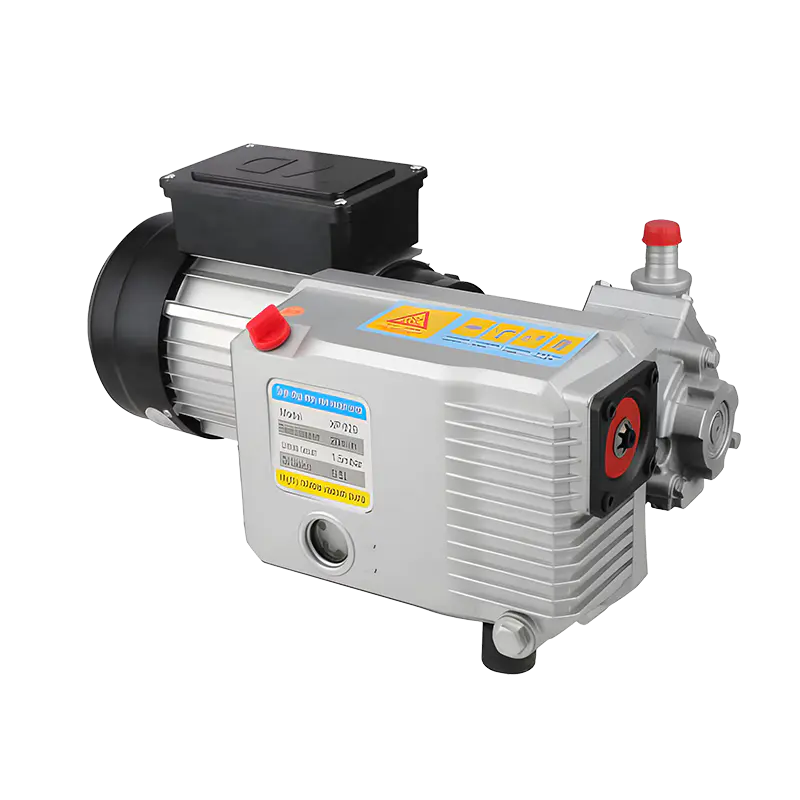
Consistent Vacuum During Repeated Packaging Cycles
A rotary vane vacuum pump uses a rotor mounted off-center inside a cylindrical housing. Sliding vanes move in and out of slots in the rotor, dividing the internal chamber into smaller spaces.
As the rotor turns, these spaces expand near the inlet and draw in gas. They then become smaller as they move toward the exhaust, compressing and discharging the gas. This continuous pumping action helps maintain a relatively stable vacuum supply for automated packaging equipment. In production, that matters when machines need to: Remove air from packaging chambers before sealing. Maintain repeatable vacuum conditions between cycles. Form packaging films around products.
Reduce variations caused by inconsistent air removal.
Actual evacuation performance depends on pump capacity, chamber volume, leakage and the amount of gas released by the product and packaging materials.
Continuous Pumping for High-Volume Production
Food packaging lines rarely operate with long breaks between cycles. A pump may need to support repeated evacuation throughout an entire shift.
Rotary vane pumps are designed for continuous operation within their specified working conditions. This makes them suitable for machines that repeatedly evacuate chambers or supply a centralized vacuum system.
However, continuous-duty capability should not be assumed from the pump type alone. Motor temperature, ambient conditions, cooling arrangements and oil condition all affect operating limits. Buyers should check the manufacturer's duty rating and recommended service intervals, especially for equipment running around the clock.
Compact Construction Makes Machine Integration Easier
Packaging facilities often have limited room around forming machines, sealing stations and conveyor equipment. A bulky vacuum pump can complicate machine layout and restrict access for maintenance.
Rotary vane pumps generally have a compact mechanical arrangement, which can simplify installation in individual packaging machines or centralized vacuum systems.
Before installation, engineers should also check the motor dimensions, inlet and exhaust positions, ventilation clearance, mounting arrangement and access to oil and filters. A pump that fits into the available space but cannot be serviced conveniently may create problems during routine maintenance.
Noise and vibration transmission should also be considered when the pump is installed close to packaging operators.
Applications Across Different Food Packaging Processes
The vacuum requirements vary considerably between packaging methods. Meat packaging, coffee packaging and dry ingredient handling do not place identical demands on a vacuum pump.
Not every rotary vane model is suitable for all four applications. Moisture content, gas load, target pressure and contamination risks should be checked before selecting a pump.
How Oil Lubrication Affects Pump Performance
Many industrial rotary vane pumps use oil to lubricate moving parts, reduce friction and improve sealing between the vanes and internal housing surfaces. The oil also helps carry away heat generated during compression.
These properties support efficient operation, but oil management is an important consideration in food factories.
Buyers should check:
Food-grade lubricant may be appropriate in certain applications, but using it does not automatically make the pump suitable for direct food contact. The entire installation must comply with the facility's hygiene and contamination-control procedures.
Where oil in the compression chamber is unacceptable, dry-running vacuum pumps may be worth considering.
Rotary Vane Pumps Compared With Other Vacuum Technologies
Rotary vane pumps are not the only option for automated packaging. Liquid ring and dry claw pumps are also used, depending on the process and factory requirements.
| Comparison factor | Rotary vane pump | Liquid ring pump | Dry claw pump |
|---|---|---|---|
| Lubrication | Commonly oil-lubricated | Uses sealing liquid | Dry compression chamber |
| Vacuum capability | Suitable for many packaging applications | Depends on liquid temperature and design | Depends on model and configuration |
| Maintenance focus | Oil, filters, vanes and seals | Sealing liquid and corrosion control | Clearances, filters and mechanical components |
| Contamination considerations | Requires oil mist management | Requires liquid management | No operating oil in compression chamber |
| Typical selection priority | Compact design and effective vacuum | Wet or vapor-tolerant applications | Oil-free process requirements |
The purchase price alone does not show which technology will cost less to operate. Energy consumption, water or oil use, maintenance frequency and replacement parts should also be considered.
Maintenance in Food Packaging Facilities
Oil condition deserves regular attention. Discolored or contaminated oil can affect internal sealing and reduce vacuum performance. Follow the manufacturer's instructions for checking oil levels and replacement intervals.
Inlet filters also need inspection. Dust, product particles and packaging debris can gradually restrict airflow. Exhaust filters should be checked for contamination and replaced when their separation performance deteriorates.
Operators should watch for changes in operating temperature, noise and vibration. A pump that becomes noticeably louder or hotter may have a developing mechanical problem, restricted ventilation or an unsuitable operating condition.
Keeping records of oil changes, filter replacements and operating hours makes it easier to identify recurring problems and plan maintenance without interrupting production unexpectedly.
Choosing a Rotary Vane Pump for Food Packaging
When comparing the Advantages of Rotary Vane Vacuum Pumps, buyers should focus on how the pump performs under the actual packaging cycle. Maximum vacuum alone is not enough. Pumping speed at the working pressure, chamber volume, evacuation time and moisture load all influence the result.
Oil separation, filtration, ventilation and service access deserve equal attention in food processing environments. A pump that meets the machine's vacuum requirements but creates difficult maintenance or contamination-control issues may not be a suitable long-term choice.
Related Products

Chengbei Industrial Zone, Xinhe Town, Wenling City, Zhejiang Province, China
Copyright © Wenling Xinsheng Mechanical and Electrical Co., Ltd. All Rights Reserved.



 English
 русский
 Español