May 22, 2026
Automotive air conditioning service involves more steps than simply adding refrigerant and hoping the system holds. When a vehicle comes in with a poorly cooling cabin or a suspected leak, the quality of every tool in the service process determines whether the repair lasts or whether the vehicle returns with the same complaint two months later. Refrigerant accessories - the hoses, couplers, gauges, vacuum equipment, and sealing components used throughout the service cycle - are where the difference between a clean, lasting repair and a recurring problem is often decided. Choosing the right accessories for the refrigerant type, connection standard, and repair scope is not a minor detail. It is the foundation of reliable automotive AC service.
Automotive AC repair is not a single action - it is a sequence, and each stage demands specific equipment. Treating it as one undifferentiated task leads to either over-equipped service bays full of tools that do not get used, or under-equipped setups that cut corners at critical points.
The standard service sequence runs as follows:
Each of these stages has its own accessory requirements, and a mismatch at any point creates a problem - either at service time or for the vehicle owner down the road.
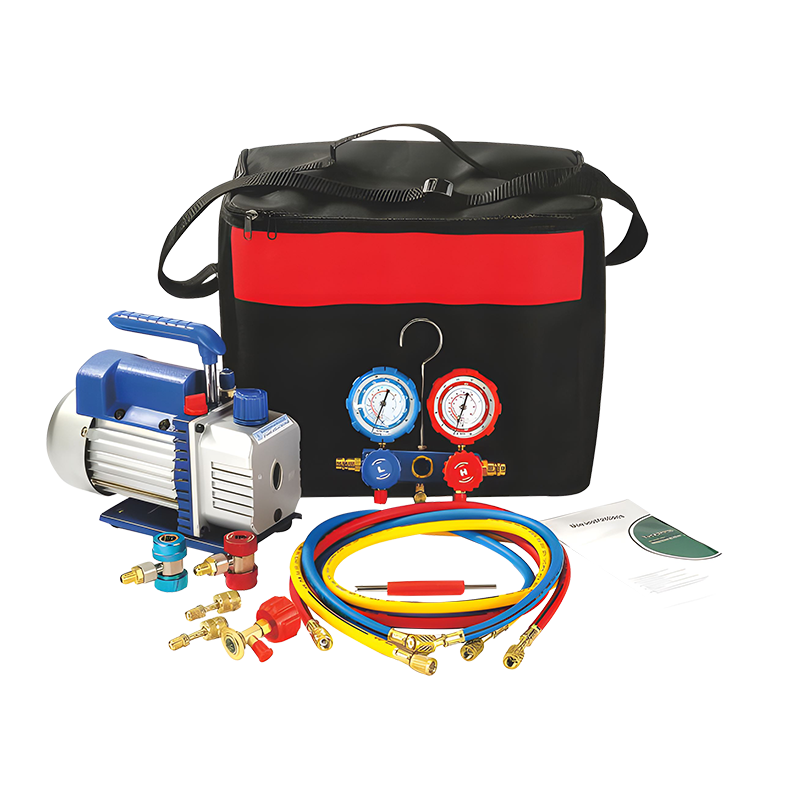
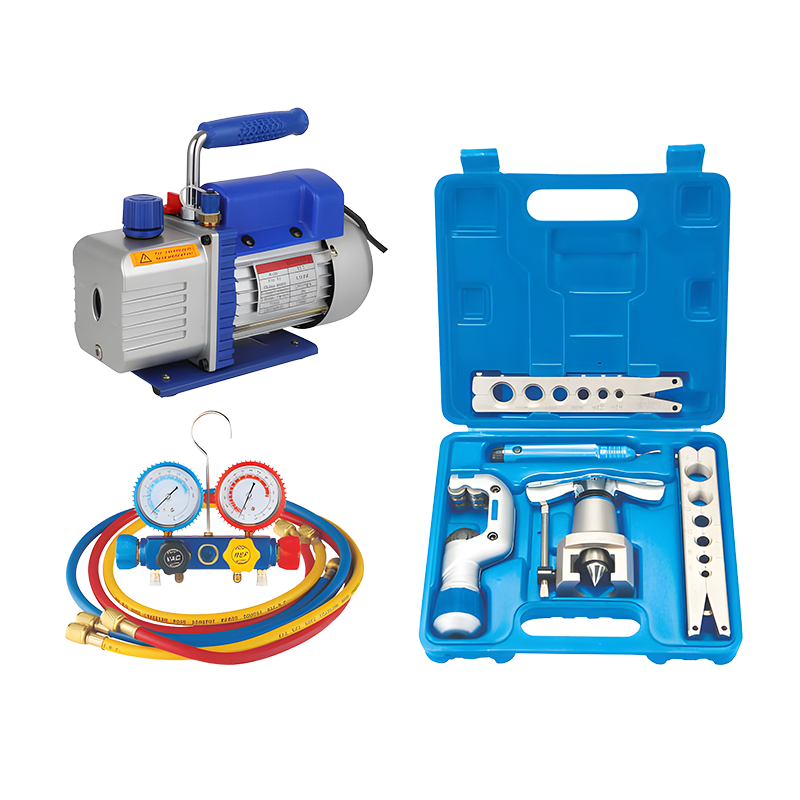
The manifold gauge set is the central instrument in automotive AC diagnosis. It connects to both the high-side and low-side service ports, reads system pressure under static and running conditions, and controls the flow path for recovery, evacuation, and charging through its center ports.
A gauge set that reads inaccurately, has sticky valves, or allows internal leakage during service corrupts the diagnosis before any other tool is even connected. Key considerations when selecting a manifold set for automotive work:
The gauge set is not a one-time investment. It is used on every vehicle that comes through AC service, which means cumulative wear on the valve seats and gauge internals is a real factor in long-term accuracy.
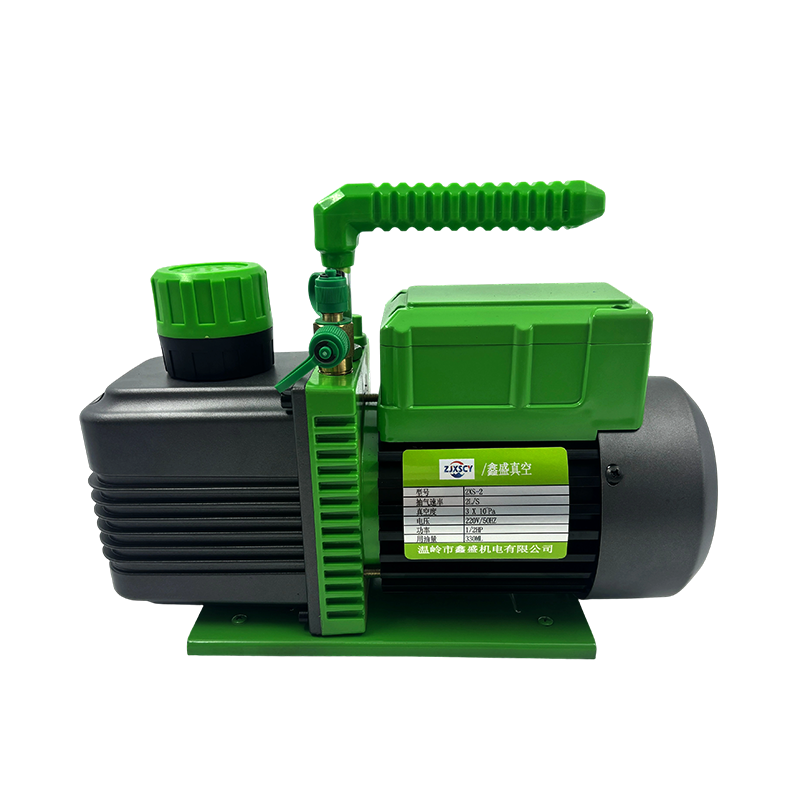
Moisture is the primary enemy of a recharged AC system. Water vapor that remains in the system after opening reacts with refrigerant under operating conditions to form acids that attack compressor seals, expansion valve seats, and the internal surfaces of the evaporator and condenser. A proper vacuum evacuation removes that moisture by pulling the system pressure low enough that water's boiling point drops to ambient temperature, allowing it to be drawn out as vapor.
A vacuum pump for air conditioning service needs to achieve and hold a deep enough vacuum level - measured in microns - to complete this moisture removal. A pump that cannot reach adequate vacuum depth, or that loses vacuum quickly due to worn vanes or a degraded oil charge, leaves moisture in the system that the gauge readings will not reveal.
What affects vacuum pump performance in real shop conditions:
For shops handling volume AC work, maintaining the vacuum pump in good condition is as important as maintaining the manifold set.
Service hoses connect the manifold gauge set to the vehicle's service ports and to the recovery/charging equipment. They carry refrigerant under both vacuum and pressure, and every fitting at each end of those hoses is a potential leak point. In a correctly assembled and maintained service setup, none of those points leak. In a worn or poorly maintained setup, refrigerant loss at the connections is both an environmental issue and a sign that the service itself may not be delivering the accuracy the vehicle needs.
Key factors in service hose selection and maintenance:
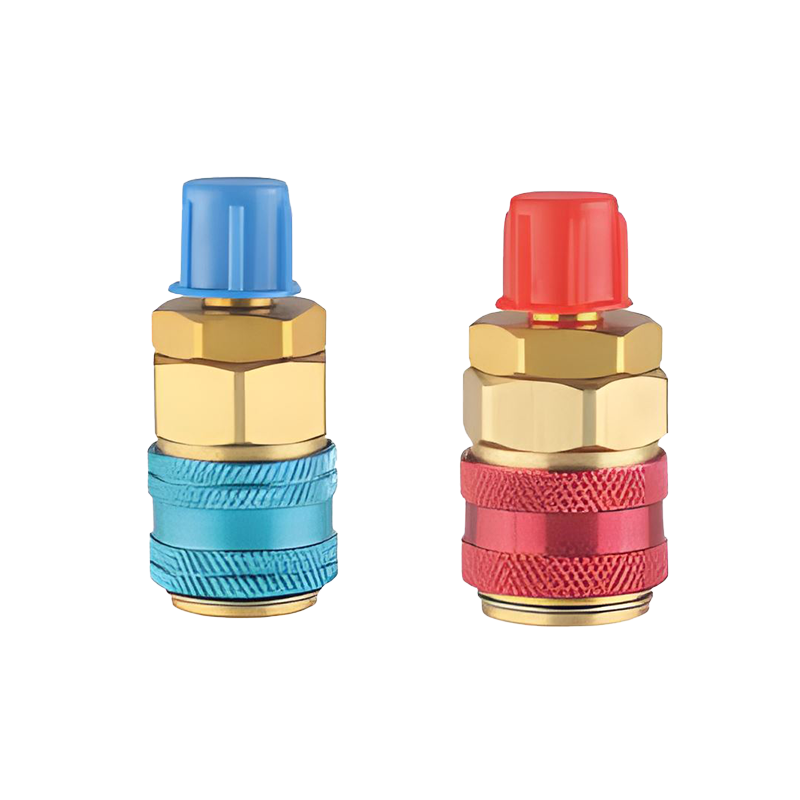
Quick couplers - the snap-on fittings that connect to the vehicle's service ports without thread engagement - also vary significantly in how well they seal at connection and disconnection. A coupler that releases a small burst of refrigerant every time it disconnects is not just wasting product; it is releasing refrigerant that was already in the service hose into the atmosphere rather than back into the recovery system.
It does, significantly. R134a and R1234yf - the two refrigerants in current widespread use across passenger vehicle fleets - use different service port sizes and coupling designs specifically to prevent cross-contamination. A service setup equipped only for R134a cannot connect to an R1234yf service port without an adapter, and using the wrong refrigerant in a system designed for the other type causes system damage that is expensive to correct.
A service setup that handles both refrigerant types needs:
Beyond the service port coupling differences, R1234yf systems generally require tighter tolerances on moisture contamination, which places higher demands on vacuum pump performance and hose sealing quality than older R134a-only service setups.
A refrigerant charge introduced into a system with an unrepaired leak will be gone within weeks or months, and the vehicle owner will return with the same complaint. Leak detection before recharging is the step that breaks this cycle.
Leak detection accessories used in automotive AC service include:
In practical service workflows, electronic detection after charging and UV dye injection as a follow-up tool for unresolved leaks covers the range of leak conditions encountered across a mixed vehicle fleet.
How different accessory types fit across the stages of a complete automotive AC service:
| Accessory | Service Stage | Key Function | Selection Priority |
|---|---|---|---|
| Manifold gauge set | Diagnosis, charging | Pressure reading and flow control | Accuracy, valve quality |
| Vacuum pump for AC service | Evacuation | Moisture and air removal | Vacuum depth, oil maintenance |
| Service hoses | All connected stages | Refrigerant transfer | Pressure rating, material compatibility |
| Quick couplers | Port connection | Seal at service port | Sealing quality, refrigerant-type specificity |
| Leak detector (electronic) | Post-charge verification | Locate refrigerant escape | Sensitivity, refrigerant type calibration |
| UV dye kit | Follow-up leak diagnosis | Visualize leak location | Compatibility with system refrigerant |
| Adapter set | Cross-platform service | Port type compatibility | Refrigerant-specific labeling |
Each accessory category serves a distinct function in the service chain. Gaps in any category create either a workflow inefficiency or a service quality issue.
For auto repair shops, fleet service operations, and tool distributors sourcing refrigerant accessories in volume, the consistency of supply quality across batches is a practical concern that individual product reviews do not address. A manifold set or a set of quick couplers that performs well in the first order but varies in the second creates unpredictable service quality and increases the overhead of incoming inspection.
Factors worth evaluating in a supplier relationship for automotive AC accessories:
The category of refrigerant accessories spans many individual SKUs, and a supplier who can consolidate that range reduces the number of sourcing relationships a shop or distributor needs to manage.
The quality of a completed automotive AC repair is a direct result of the tools and accessories used throughout the service process. A system that holds its charge cleanly, cools reliably, and does not develop moisture-related damage over its service life is the outcome of proper evacuation, accurate charging, and leak-free connections at every service point. The accessories that make that possible - manifold gauges, vacuum equipment, service hoses, couplers, and leak detection tools - need to be selected with the same care as the repair itself. For auto repair shops, equipment distributors, and wholesale vacuum pump buyers sourcing refrigerant accessories for volume supply or OEM tool programs, Wenling Xinsheng Mechanical and Electrical Co.,Ltd. produces a range of automotive AC service accessories covering manifold gauge components, vacuum pump accessories, service hoses, and coupling hardware for both R134a and R1234yf applications. Contacting their team to discuss product specifications, custom configurations, or wholesale supply arrangements is a practical starting point for building a reliable accessory supply chain for professional automotive AC service.
Related Products

Chengbei Industrial Zone, Xinhe Town, Wenling City, Zhejiang Province, China
Copyright © Wenling Xinsheng Mechanical and Electrical Co., Ltd. All Rights Reserved.



 English
 русский
 Español