Apr 17, 2026
How Does Material Science and Structural Design Ensure Vacuum Integrity?
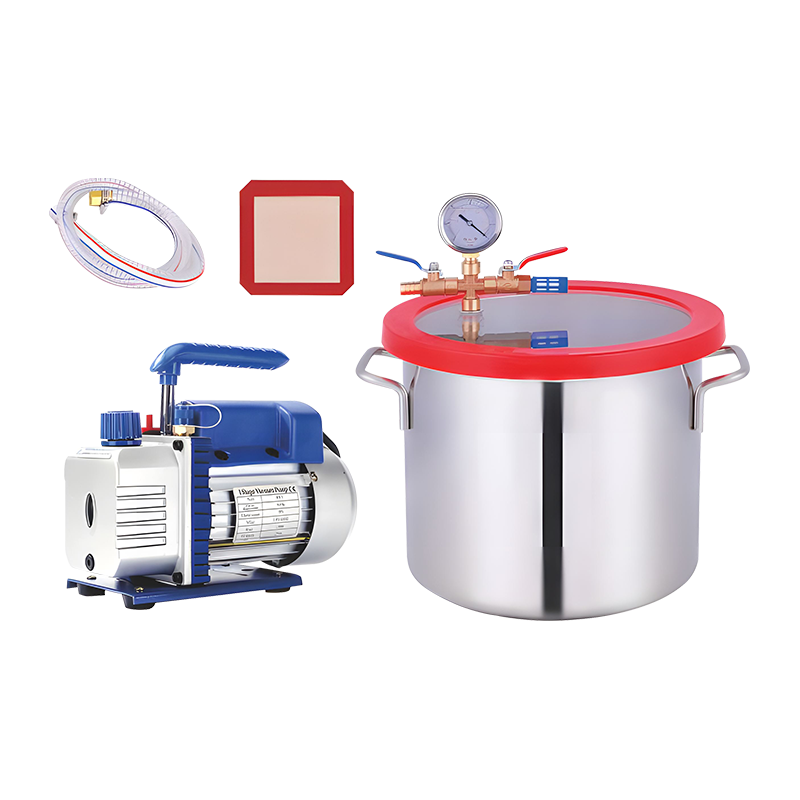
The selection of stainless steel, typically grades 304 or 316, is based on its low outgassing rate, corrosion resistance, and mechanical strength under external atmospheric pressure. When a chamber is evacuated, the pressure difference between the outside (approximately 101 kPa) and inside (as low as 10⁻⁶ kPa or lower) generates significant compressive stress on the chamber walls. For a cylindrical chamber, wall thickness is calculated using formulas derived from thin-shell pressure vessel theory. A common laboratory chamber with a 300 mm diameter and 500 mm length often uses 5–8 mm thick 304 stainless steel.
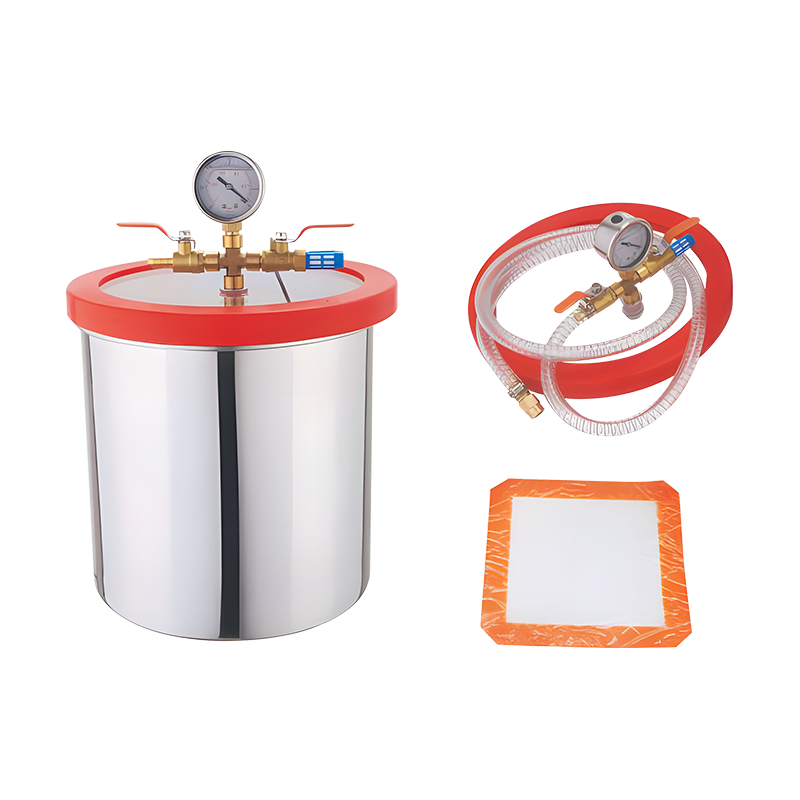
Welding is the primary joining method for chamber bodies and ports. To maintain leak-tightness, welds must be full-penetration and often inspected by helium leak detection. The internal surface finish—typically mechanically polished or electropolished—reduces surface area available for adsorbed gas molecules, thereby improving ultimate vacuum pressure. All seals between metal components and doors use elastomer O-rings (e.g., Viton or Buna-N) or, for ultrahigh vacuum, metal gaskets (e.g., copper). Every penetration—whether for electrical feedthroughs, gas inlets, or viewports—requires a vacuum-rated flange, most commonly ConFlat (CF) or KF (quick-flange) standards. A typical CF flange uses a knife-edge that bites into a copper gasket when bolted, achieving leak rates below 1.3 × 10⁻¹⁰ Pa·m³/s.
Manufacturing and Surface Treatment Methods
The production sequence for a stainless steel vacuum chamber includes cutting, forming, welding, leak testing, and surface finishing. Below is a summary of common manufacturing steps and their purposes.
|
Manufacturing Step |
Typical Method |
Purpose |
|
Cutting |
Plasma or laser cutting |
Produce precise blanks for cylinder, end plates, and ports |
|
Forming |
Rolling and pressing |
Create cylindrical body and hemispherical or flat end caps |
|
Welding |
TIG (GTAW) welding, often with filler rod |
Achieve continuous, porosity-free seams |
|
Leak detection |
Helium mass spectrometry (vacuum mode) |
Verify leak rate ≤ 10⁻⁹ mbar·L/s for moderate vacuum |
|
Surface preparation |
Electropolishing or mechanical polishing |
Reduce roughness (Ra ≤ 0.4 µm) to lower outgassing |
|
Degreasing |
Ultrasonic cleaning with alkaline solution |
Remove machining oils and particles |
After welding, chambers are frequently passivated using a nitric or citric acid bath to remove free iron from the surface and restore the chromium oxide layer. Electropolishing also removes microscopic burrs and reduces particle adhesion. For applications requiring high or ultrahigh vacuum (below 10⁻⁷ Pa), chambers undergo vacuum firing at 400–950 °C in a furnace to drive out hydrogen trapped in the stainless steel lattice. This step can reduce outgassing rates by a factor of 10 to 100 compared to non-baked chambers.
Operational Safety and Practical Limitations
Operating a stainless steel vacuum chamber involves managing three principal hazards: implosion, electrical risks, and exposure to hazardous materials. An implosion occurs when the chamber wall fails under external atmospheric pressure, causing sudden inrush of air. For a 50-liter chamber, the stored energy in compressed air at failure can exceed 5 kJ, producing a shock wave and metal fragments. To mitigate this, chambers are rated for a maximum differential pressure, typically 0.1–0.2 MPa, with a safety factor of 3–4 based on yield strength. Operators should use a blast shield or ensure the chamber is placed inside a protective enclosure when evacuating glass or ceramic viewports.
Electrical feedthroughs can carry high voltage (up to 10 kV for certain plasma applications) or high current (hundreds of amperes for resistive heating). These feedthroughs must be shielded and interlocked to prevent accidental contact during venting. Additionally, chambers used for coating or etching may contain toxic process gases (e.g., silane, chlorine, or organometallic compounds). A gas handling system with purge cycles, scrubbers, and residual gas analyzers is required. The user manual of any commercial chamber specifies the maximum bakeout temperature (usually 150–200 °C for elastomer seals, 400 °C for all-metal sealed chambers) and the pressure range (e.g., 1 atm to 10⁻⁶ mbar). Regular inspection of O-rings for cracks and flange bolts for torque loss is necessary to maintain safe operation.
Comparative Applications in Research and Industry
Stainless steel vacuum chambers serve different roles depending on the pressure regime and environment required. The table below compares typical applications across four sectors.
|
Sector |
Typical Pressure (absolute) |
Chamber Size |
Primary Use |
|
Analytical chemistry |
10⁻³ to 10⁻⁶ mbar |
1–20 L |
Electron microscopy sample preparation, residual gas analysis |
|
Semiconductor fabrication |
10⁻⁶ to 10⁻⁹ mbar |
50–500 L |
Physical vapor deposition (sputtering), plasma etching |
|
Space simulation |
10⁻⁷ to 10⁻¹⁰ mbar |
1–200 m³ |
Thermal vacuum testing of satellite components |
|
Food packaging machinery |
10⁻¹ to 10⁻² mbar |
0.1–5 m³ |
Vacuum sealing and modified atmosphere packaging |
In research settings, a stainless steel chamber is valued for its magnetic neutrality (austenitic grades are non-magnetic) and compatibility with bakeout cycles. Industrial chambers prioritize cycle speed and ease of cleaning, often using larger-diameter gate valves for rapid pump-down. For example, a typical semiconductor sputtering system operates with a base pressure near 10⁻⁸ mbar but uses argon backfilling to 10⁻² mbar during deposition. The chamber must transition between these pressures every few minutes, requiring robust gate valves and pressure control loops. In contrast, a space simulation chamber may remain under high vacuum for weeks, with liquid nitrogen cryopanels to condense water vapor and achieve pressures below 10 mbar. Despite these differences, the stainless steel chamber remains a common platform due to its predictable mechanical behavior and compatibility with standard pumping systems (turbo-molecular, cryogenic, or diffusion pumps).
Related Products

Chengbei Industrial Zone, Xinhe Town, Wenling City, Zhejiang Province, China
Copyright © Wenling Xinsheng Mechanical and Electrical Co., Ltd. All Rights Reserved.



 English
 русский
 Español