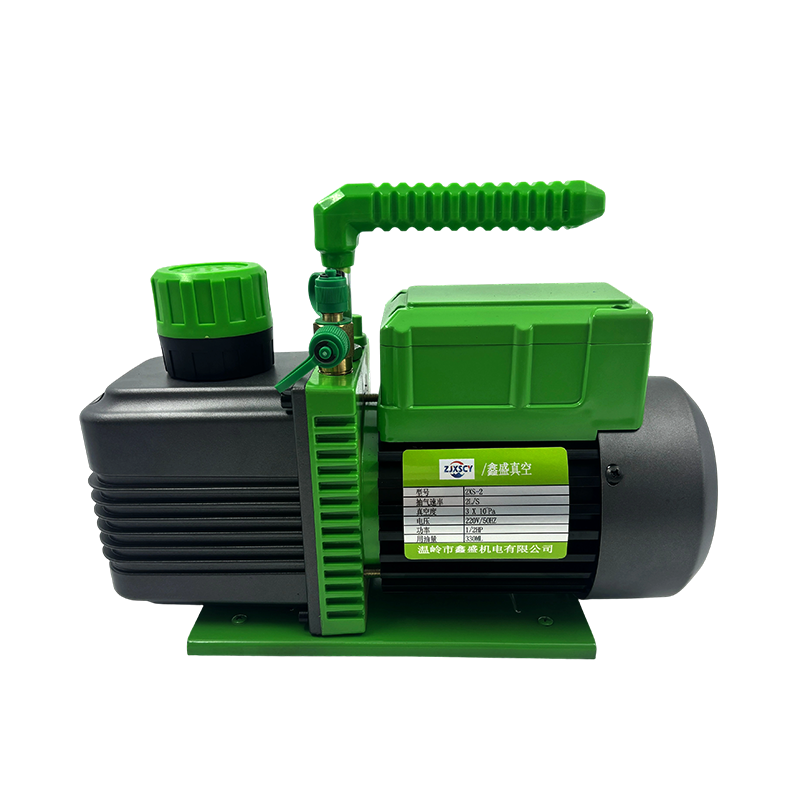
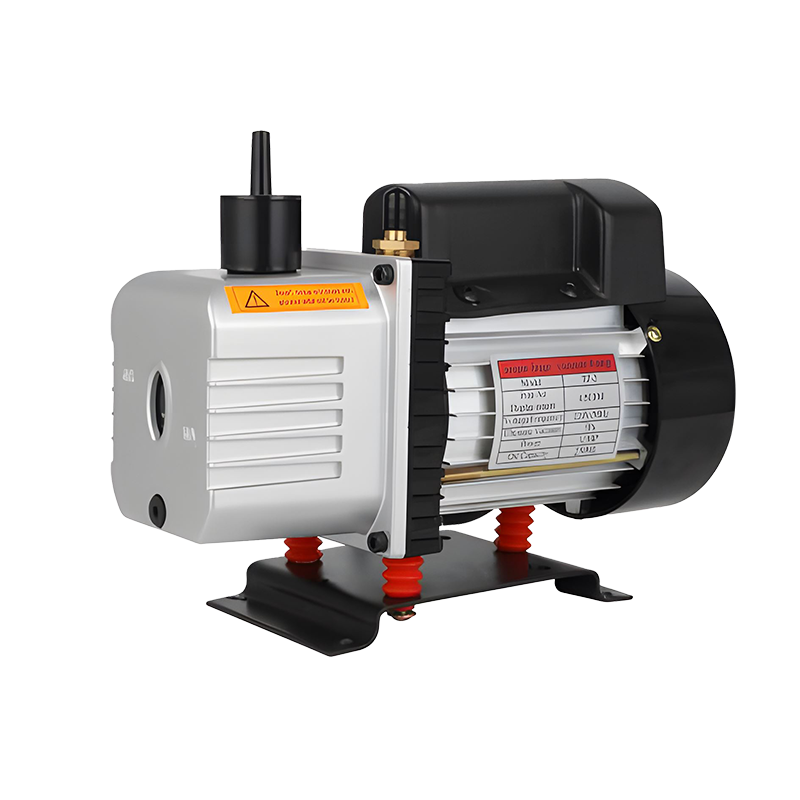
Equipment that handles vacuum generation occupies a central position in many industrial and service workflows. When it underperforms or fails ahead of schedule, the disruption reaches beyond the cost of a replacement unit — downtime accumulates, service intervals are missed, and overall system reliability comes into question. The factors that govern how long a vacuum pump maintains consistent performance are rarely mysterious; they are, in most cases, traceable to identifiable decisions made during operation, maintenance, and initial procurement. A Vacuum Pump Single Stage design, for example, is a common choice across HVAC servicing, refrigeration recovery, and light manufacturing environments. Its mechanical architecture is relatively uncomplicated, yet units of this type are routinely returned for service or replaced earlier than necessary because the operating and maintenance practices applied to them fall short of what the equipment requires. The purpose of addressing service life extension is not to introduce elaborate procedures. It is to draw attention to the practices and decisions — some operational, some organizational — that separate equipment with a predictable, extended service record from equipment that cycles through repair and replacement at unnecessary cost.
Why Vacuum Pumps Deteriorate Faster Than They Should
Premature deterioration in vacuum equipment generally traces to a small number of recurring causes. These are not obscure failure modes; they appear consistently across industries and application types, and they are preventable in most cases with structured attention.
Oil contamination stands as the most frequently identified cause of internal wear. In a rotary vane vacuum pump, the lubricating oil also functions as a sealing medium within the compression chamber. When moisture, refrigerant vapors, or fine particulates enter the oil, its viscosity and chemical stability are compromised. The sealing film thins, internal metal-to-metal contact increases, and wear accelerates at a rate that clean oil would have prevented.
Vacuum equipment operating beyond its designed duty cycle, or in environments where heat cannot dissipate adequately, sustains cumulative thermal stress. Seals harden and lose elasticity; vanes experience dimensional changes; housing components expand at mismatched rates. None of this is immediately visible, but the effects manifest as reduced vacuum depth, increased noise, and eventual failure of components that would have remained serviceable under proper conditions.
SEQ
Incorrect Operating Sequences
Incorrect operating sequences — particularly at startup and shutdown — introduce mechanical stress at the moments when the unit is most vulnerable. Oil migration into connected lines during shutdown, pressure surges at startup, and incomplete purging of moisture after a heavy-duty cycle all contribute to wear that compounds over time.
FILT
Degraded or Blocked Filtration
Degraded or blocked filtration restricts the inlet airflow the pump depends on to operate within its designed parameters. A partially blocked filter forces the pump to draw against elevated resistance, increasing load on the motor and internal components alike.
STOR
Storage and Handling Practices
Storage and handling practices are frequently overlooked. Units stored with open ports absorb atmospheric moisture. Pumps left with degraded oil in the reservoir over extended idle periods develop internal corrosion that is not apparent until the unit is returned to service.
These Causes Interact
Contaminated oil generates more heat; elevated heat degrades oil faster; degraded oil reduces the lubrication film that protects vanes and seals. Addressing any one factor in isolation yields partial results. A coordinated approach to all of them is what produces measurable improvement in service life.
Operating Procedures: Where Service Life Is Won or Lost
The mechanical stress a vacuum pump accumulates over its service life is shaped substantially by how it is operated during every cycle — not only during exceptional conditions, but during routine daily use. Consistent adherence to correct procedures reduces this accumulated stress in ways that no amount of after-the-fact maintenance can fully recover.
Pre-Startup — Step 1
Inspect the oil level and condition before each use. Oil that has turned milky indicates moisture contamination; dark or opaque oil indicates thermal or particulate degradation. Either condition requires an immediate change before the unit is run.
Pre-Startup — Step 2
Confirm that all inlet and outlet connections are properly seated and that isolation valves are in the correct position.
Pre-Startup — Step 3
In cold ambient conditions, allow the unit to warm briefly before drawing load. Cold oil circulates poorly and provides inadequate lubrication during the initial compression cycle.
During Operation — Step 4
Monitor operating temperature throughout the duty cycle. Sustained high temperatures that cannot be attributed to ambient conditions indicate either insufficient ventilation, oil degradation, or excessive load.
During Operation — Step 5
Manage inlet conditions carefully. Liquid entry — whether water or refrigerant in liquid phase — causes rapid internal damage that cannot be reversed. Moisture separators and proper inlet line management are not optional accessories in high-humidity or refrigerant-handling environments.
During Operation — Step 6
Avoid exceeding the duty cycle rating of the unit. Continuous operation in applications that call for intermittent cycles accelerates wear in components designed for periodic load relief.
Shutdown — Step 7
Close the inlet isolation valve before powering down. This prevents oil backflow into connected vacuum lines or systems.
Shutdown — Step 8
Allow the pump to run for a brief period with the inlet closed before switching off. This purging step helps carry residual moisture out of the oil before the unit cools and the oil settles.
Shutdown — Step 9
If the unit will not be returned to service within a short period, cap all external ports. This is a simple step that prevents moisture ingress during idle storage.
The time investment these procedures require per cycle is marginal. The cumulative benefit, measured in reduced internal wear and fewer unplanned service events, is substantial.
Structured Maintenance: The Foundation of Extended Service Life
No operating discipline compensates fully for deferred maintenance, and no maintenance program delivers results if it is applied inconsistently. The table below outlines a service schedule applicable to rotary vane and single-stage vacuum equipment across common industrial and service applications.
| Maintenance Task |
Recommended Interval |
Key Indicators and Notes |
| Oil visual inspection |
Before each use |
Milky oil signals moisture; dark oil signals degradation — both require immediate change |
| Oil change |
Every 20 to 30 operating hours |
Shorten interval in moisture-heavy or refrigerant service applications |
| Inlet filter inspection |
Monthly |
Replace before airflow restriction becomes measurable in vacuum performance |
| External surface and vent cleaning |
Monthly |
Accumulated debris on housing vents significantly reduces cooling capacity |
| Gasket and seal condition check |
Every 6 months |
Oil seepage around joints or port fittings indicates seal degradation |
| Full internal component inspection |
Annually |
Vane condition, spring tension, rotor surface, and bearing feel should all be assessed |
| Deep oil flush after contamination event |
As required |
Run a dedicated flush charge through a brief cycle before refilling with fresh oil |
The interval guidance in the table above represents a baseline. Applications involving sustained high load, elevated ambient temperatures, or frequent moisture exposure require shorter service intervals to maintain the same level of protection. The judgment about when to adjust intervals belongs to the operator — but the default assumption should be that more demanding conditions require earlier intervention, not later.
Oil Is the Sealing Medium, Not Just a Lubricant
A critical point for rotary vane designs specifically: oil is not simply a lubricant in these units. It is the sealing medium that determines whether the compression chamber maintains its geometry under load. When oil quality deteriorates, vacuum depth declines before any mechanical failure is apparent. Many operators interpret declining vacuum performance as a mechanical problem when the immediate cause is oil condition. An oil change performed at the first sign of declining performance frequently restores output without any further intervention.
Operating Environment and Its Effect on Equipment Longevity
Ventilation and Heat Dissipation
Vacuum equipment generates heat as a byproduct of compression. That heat must be able to leave the housing through the surrounding air. Units installed in enclosed spaces, stacked against other equipment, or positioned where ambient air is already warm will run hotter than their design intends. Elevated operating temperature is not merely uncomfortable for the equipment — it degrades oil faster, stresses seals, and shortens the service interval for all internal components.
Humidity Exposure
High-humidity operating environments present a continuous contamination risk for the oil reservoir. Moisture that enters through the inlet or condenses internally during cooling cycles accumulates in the oil over time. In applications involving vacuum pump for air conditioning service, where refrigerant recovery and system evacuation are routine tasks, moisture management is not a secondary concern — it defines the maintenance frequency required to keep the unit serviceable.
Vibration Transmission
Vacuum equipment mounted directly to surfaces that transmit structural vibration — floors near heavy machinery, vehicle beds, or workbenches subject to impact — experiences fatigue loading on fittings, housings, and internal components that is independent of operational loading. Anti-vibration mounting, where practical, reduces this accumulation of mechanical fatigue.
Inlet Air Quality
The quality of gas entering the inlet affects both the oil and the internal surfaces directly. Environments with elevated particulate content, chemical vapors, or intermittent liquid carryover require corresponding inlet protection. Filters and moisture separators sized to the application conditions should be treated as integral components, not optional additions.
Does the Choice of Pump Design Affect Maintenance Requirements?
Rotary Vane Vacuum Pump
The rotary vane design delivers reliable vacuum depth across a wide range of applications and is frequently the configuration of choice for HVAC service, refrigeration recovery, and laboratory evacuation. Its performance depends directly on oil quality and film thickness within the compression chamber. When oil maintenance is current, vane-to-housing contact remains properly lubricated and the unit achieves consistent vacuum depth. When oil maintenance is deferred, the lubrication film thins, vane wear accelerates, and vacuum performance declines progressively. The rotary vane configuration is not mechanically fragile — it is, however, sensitive to oil condition in a way that makes maintenance interval adherence particularly consequential.
Vacuum Pump Single Stage
Single-stage configurations offer a simpler internal architecture with fewer moving components compared to two-stage designs. This simplicity translates to lower maintenance complexity and a reduced number of potential failure points, which is one reason single-stage units are widely used in field service contexts where ease of maintenance and predictable reliability are valued. Their suitability for continuous deep vacuum work is more limited than two-stage configurations, but for applications that do not require the vacuum depth a two-stage unit provides, the single-stage design offers a practical balance of performance and serviceability.
Both configurations respond to maintenance with proportional benefits, but the consequence of deferred service differs. For rotary vane equipment, oil degradation is the primary failure driver. For single-stage equipment, operating the unit outside its intended pressure range is typically the more significant concern.
What the Procurement Decision Contributes to Long-Term Reliability
A well-executed maintenance program extends the service life of a well-built pump. It cannot, however, compensate for manufacturing deficiencies in the original unit. The tolerances to which internal components are machined, the materials selected for vanes and seals, the design of the oil reservoir and separation system — all of these influence how the unit responds to wear over time, independent of how carefully it is operated.
When evaluating a wholesale vacuum pump purchase, procurement teams are making a decision that has implications not only for the initial purchase price but for the frequency and cost of maintenance, the availability of service parts, and the overall cost of ownership across the expected service period.
Manufacturing Characteristics Worth Evaluating
- Vane material and surface finish — Vanes with tighter dimensional tolerances and harder surface treatments maintain their sealing geometry longer and resist abrasive wear more effectively.
- Oil reservoir capacity and separation design — Larger oil volumes extend the interval between changes; effective oil-mist separation reduces consumption and keeps the reservoir cleaner between service events.
- Housing thermal characteristics — Housing design that facilitates heat dissipation reduces the operating temperature that accelerates oil degradation and seal wear.
- Parts availability and supply consistency — A unit whose replacement components are stocked and available from the source factory presents significantly lower long-term downtime risk than one whose parts must be sourced through secondary channels.
For organizations considering a custom vacuum pump configuration — whether involving modified port arrangements, capacity variations, application-specific filtration integration, or other design adaptations — the manufacturing capability and technical flexibility of the factory become relevant in addition to standard product quality factors. Working with a vacuum pump factory that has experience translating application requirements into product specifications reduces the risk of mismatches between equipment capability and operational demand.
Application-Specific Maintenance: Matching Service Practices to Industry Context
The maintenance framework described above applies broadly, but the emphasis within that framework should reflect the actual operating environment and application type. Three common contexts illustrate how maintenance priorities shift with application.
HVAC
HVAC and Air Conditioning Service
In HVAC applications, moisture contamination is the dominant maintenance concern. Refrigerant vapors carry moisture that enters the pump oil with each evacuation cycle. The oil absorbs this moisture, and the resulting emulsification degrades its lubricating and sealing properties. Units used intensively in air conditioning service require oil changes at intervals shorter than general guidance suggests, and a post-job purge cycle — running the pump briefly with the inlet isolated — helps reduce moisture accumulation between changes.
IND
Manufacturing and Continuous Industrial Use
Industrial applications involving extended or continuous duty cycles present heat management as the primary concern. Pumps running extended shifts without adequate thermal relief accumulate heat that degrades oil, stresses seals, and shortens vane service life. Duty cycle management — scheduling operational periods that allow thermal recovery — is as important as maintenance interval adherence in these environments. Inlet filtration must also be matched to the particulate content of the production environment; standard filters may require more frequent inspection and replacement in dusty or debris-generating settings.
REFR
Refrigeration and Seasonal Service
Refrigeration service pumps are frequently operated seasonally, with extended idle periods between active service windows. Preparation for idle storage and recommissioning after storage are the maintenance priorities unique to this context. Units stored with degraded oil or open ports absorb moisture and develop internal corrosion during idle periods. A pre-season service — oil change, filter inspection, and a brief run-in cycle before returning the unit to active work — prevents failures in the opening days of a service season when demand is high and replacement time is limited.
Reading the Warning Signs: Recognizing Developing Problems Before Failure
Vacuum equipment does not typically fail without warning. Changes in performance, sound, temperature, and oil appearance precede mechanical failure in most cases, and operators who recognize these signals and act on them promptly prevent the majority of unplanned replacement events.
- Extended time to reach target vacuum depth — When a unit that previously reached working vacuum within a predictable period begins taking noticeably longer, the cause is most commonly oil degradation, a developing seal leak, or inlet restriction. Each of these is addressable before it causes component damage.
- Changes in operating sound — Increased mechanical noise, rattling, or the development of a sound pattern not present during previous operation indicates internal wear, foreign material in the compression chamber, or vane damage. Operating through unusual noise accelerates whatever underlying problem is producing it.
- Oil appearance changes — Oil that has turned milky or cloudy contains moisture. Oil that has darkened significantly has undergone thermal or chemical degradation. Either condition indicates that an oil change is overdue.
- Sustained elevated operating temperature — When operating temperature rises above what ambient conditions explain, the cause is typically inadequate ventilation, low oil level, or oil that has lost its heat-carrying capacity through degradation.
- Oil mist at the exhaust — Visible oil mist from the exhaust outlet indicates either worn seals allowing oil carryover or an overfilled reservoir. Both conditions waste oil and introduce contamination risk to connected systems.
Acting on these indicators with targeted maintenance — an oil change, a seal inspection, a filter replacement — restores performance and prevents the secondary damage that develops when the underlying condition is allowed to continue.
Summarizing the Practices That Extend Service Life
The following steps represent the practices with the most consistent impact on service life across pump types and application contexts:
Step 1
Inspect oil before every use and change it immediately when contamination is detected, regardless of where the previous change falls in the interval schedule.
Step 2
Follow correct startup and shutdown procedures with discipline — particularly the inlet isolation and moisture purge steps that protect oil quality between cycles.
Step 3
Maintain inlet filtration in clean, functional condition. Replace filters before airflow restriction affects performance.
Step 4
Manage operating environment to support adequate heat dissipation. Treat ventilation as a maintenance variable, not a fixed condition.
Step 5
Prepare units properly for any period of idle storage. Cap ports and use fresh oil before the unit goes inactive.
Step 6
Match pump type to application. Operating equipment beyond its designed parameters produces wear that maintenance cannot fully offset.
Step 7
When sourcing replacement or additional units, evaluate manufacturing quality factors alongside purchase price.
Consistent application of these practices, calibrated to the specific operating environment and adjusted as conditions change, accounts for the difference between vacuum equipment that performs reliably across its intended service life and equipment that demands repeated intervention and early replacement.
Equipment service life is ultimately a product of accumulated decisions — decisions made during original procurement, during daily operation, and across the maintenance intervals that determine the condition in which internal components reach each new cycle of use. For procurement teams evaluating wholesale vacuum pump options, or for engineering and maintenance personnel assessing whether a custom vacuum pump specification would better serve an application's demands, these considerations extend the conversation beyond initial pricing into long-term operational value.
About the Manufacturer
Wenling Xinsheng Mechanical and Electrical Co.,Ltd. manufactures and supplies vacuum equipment for industrial, HVAC, and refrigeration service applications, operating as a vacuum pump factory with the capability to support both standard product requirements and application-specific configurations. Teams working to extend equipment service life while managing procurement cost and supply reliability are welcome to reach out directly to discuss requirements, technical specifications, and sourcing arrangements suited to their operational context.




 English
 русский
 Español