Aug 14, 2026
Picking a vacuum pump involves more than confirming it can pull air out of a system. A packaging line running film-wrapped food trays has different needs than a woodworking shop holding panels flat during a CNC cut. Buyers have to think about how the pump mounts into the equipment, how often it runs, what it's exposed to, and how a technician will eventually service it.
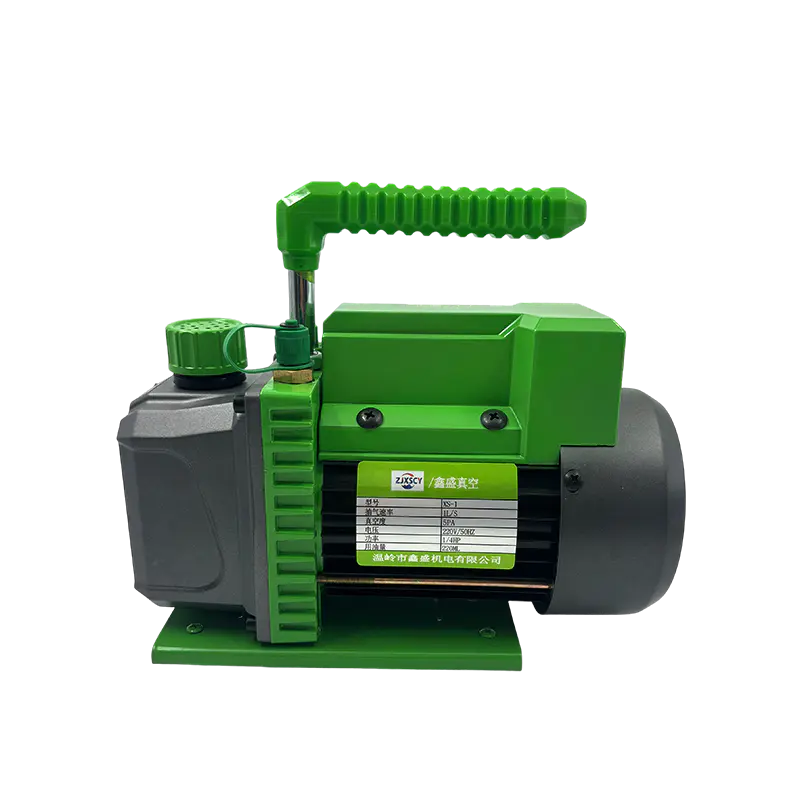
A single-stage vacuum pump tends to suit situations where the vacuum requirement is direct and doesn't need multiple compression stages to reach. Its construction is comparatively simple, which can make it a workable fit across a range of industrial settings — as long as the pump actually matches what the process needs from it.
For procurement staff, equipment builders, and maintenance teams, the real question isn't whether a single-stage pump can technically do industrial work. It's whether the design lines up with the specific task, the space it needs to fit into, and the environment it'll run in day after day.
Manufacturing processes use vacuum for a range of jobs — holding a part in place, packaging a product, drying a material, lifting something off a conveyor. The vacuum level and flow rate a job calls for can vary quite a bit from one task to the next.
A single-stage pump reaches its vacuum level through one pumping cycle rather than a staged, multi-step compression process. That makes it comparatively easy to size and wire into equipment where the vacuum task has clear, defined parameters — a bag sealer that needs air pulled out before sealing, for instance, doesn't need the same complexity as a system pulling down to a much deeper vacuum for a specialized coating process.
A few things worth checking before settling on a configuration:
A simple pump mechanism doesn't mean every job calling for one looks the same. The equipment around it still determines whether it's a workable fit.
Vacuum gets used for different reasons depending on the facility. A food processor might use it to seal packaging and extend shelf life. A furniture shop might use it to hold a workpiece steady while a router cuts around it. A print shop might use it to feed sheets of paper one at a time through a press.
The underlying mechanism is often similar, but the role the pump plays shifts with the process.
In packaging, vacuum removes air from a sealed bag or supports a handling arm that lifts product onto a conveyor. In material handling, suction cups or lifting heads rely on steady vacuum to move parts without damaging them. In forming or shaping work, vacuum holds a sheet material flat against a mold or table while it's cut or thermoformed. Drying and degassing processes use reduced pressure to pull moisture or trapped gas out of a material. Equipment evacuation — clearing air from a sealed chamber before a coating or testing process begins — is another common use.
A single-stage pump fits naturally in these cases when the vacuum requirement is clearly defined and doesn't call for a more elaborate staged system.
It's worth noting that two operations both labeled "packaging equipment" can still need different pumps, because the product, the packaging film, the cycle speed, and the machine layout aren't identical between them.
Vacuum technology touches a wide range of equipment, and what a facility needs from the pump usually traces back to the specific process it supports.
Vacuum removes air during sealing or supports pick-and-place arms that handle product. The pump has to keep pace with the machine's cycle time and fit within whatever space the equipment frame allows.
Suction-based handling relies on steady vacuum to lift and move parts — sheet metal, cardboard, glass panels. Pump selection here connects directly to the handling equipment's design and how fast it needs to cycle.
Certain drying processes run at reduced pressure to pull moisture out faster or at lower temperatures. The pump needs to work alongside heating elements, condensers, or other parts of that system without becoming a bottleneck.
Thermoforming and vacuum-forming processes use suction to pull heated material against a mold surface. The pump becomes one component within a larger production cell, often running in sync with heating and cooling cycles.
Some processes need air cleared from a sealed space before the next step — coating, testing, certain assembly work. A single-stage pump often handles this cleanly when the vacuum target is straightforward and well-defined.
These examples point to a simple takeaway: buyers shouldn't pick a pump off a general industry label. The actual process inside that industry is what matters.
Industrial equipment layouts fill up fast — motors, tanks, control panels, piping, filters, and valves often take up most of the available room before the vacuum pump even enters the picture.
A pump has to slot into that existing arrangement without forcing a redesign of the rest of the machine.
Worth working through before finalizing a choice:
Compact pump designs tend to matter more in machines with a tight internal footprint. Larger equipment usually allows more flexibility in where things go, though access still counts — a pump wedged behind a control cabinet turns a routine check into a longer job than it should be.
For equipment builders, this matters because the pump isn't a bolt-on afterthought. It's part of the machine's overall design from the layout stage forward.
Buying vacuum pumps in volume comes with different considerations than sourcing a single replacement unit for one machine.
A B2B buyer supplying multiple production lines, or building the same equipment repeatedly, needs pumps that behave consistently from one unit to the next and fit the same mounting pattern every time.
A useful starting point is mapping out the intended applications before requesting quotes:
Clear communication with the supplier matters here. Giving a supplier real detail about the equipment — not just asking for "a vacuum pump" — puts them in a better position to recommend something that actually fits, rather than defaulting to whatever's easiest to quote.
For volume purchasing, packaging for shipment, delivery scheduling, consistency across batches, and how responsive the supplier is during the process all factor into whether the sourcing experience goes smoothly.
Not every machine follows a typical layout. A retrofit project, an older piece of equipment being updated, or a specialized process might have installation requirements that don't match a standard pump's dimensions or port placement.
In those cases, a custom vacuum pump configuration can be worth discussing — not as a default choice, but when a standard unit genuinely doesn't fit.
Customization doesn't have to mean redesigning the whole pump. It might just mean adjusting:
For equipment manufacturers retrofitting an existing machine design, this can solve a real fit problem. That said, customization should be based on an actual constraint. If a standard pump already does the job, adding custom features just adds cost and complicates future sourcing and repairs.
A direct conversation with the supplier — walking through the actual installation — usually clarifies whether customization is needed or whether a standard unit will do the job.
The same pump model can face very different conditions depending on where it's bolted in. A pump running inside a climate-controlled cleanroom deals with a different set of stresses than one mounted on equipment near a loading dock exposed to dust and temperature swings.
Environment can also influence where within the machine a pump gets placed — tucking it into a somewhat protected spot can cut down on both wear and the frequency of cleaning it needs.
This is another reason to look at the whole system around the pump rather than choosing based on a product name or general spec sheet alone.
Once a pump is installed, it becomes part of the equipment's ongoing maintenance routine — inspection, cleaning, eventual replacement, all of it.
A design that's easy to reach saves a technician real time during routine checks. If a pump ends up boxed in by other components, even a simple filter change can turn into an extended job.
A basic maintenance plan might include:
This matters in facilities where downtime directly affects output — a packaging line stopped for an hour to service a hard-to-reach pump has a real cost attached to it.
For wholesale buyers, a supplier's documentation and responsiveness around maintenance questions can be worth factoring into the decision alongside price and lead time.
Not every buyer is looking for the same thing. Some need a standard pump for a familiar machine they've run for years. Others are integrating a pump into a new equipment design and need something that fits a specific set of constraints.
This pushes suppliers to engage with more than the basic mechanics of vacuum generation.
Productive supplier conversations tend to cover:
Manufacturing consistency matters here too, particularly for buyers producing the same equipment repeatedly. Getting units that mount and perform the same way, batch after batch, avoids introducing variation into an otherwise standardized machine design.
For equipment manufacturers, this turns supplier selection into part of the engineering process rather than a simple parts purchase.
As industrial applications continue to diversify, choosing a single-stage vacuum pump increasingly comes down to the specific equipment, process, installation environment, and maintenance routine involved — rather than a generic assumption that one configuration works everywhere. Working through those factors upfront helps buyers figure out whether a standard single-stage unit, a wholesale order, or a customized setup actually fits what they're building.
Related Products

Chengbei Industrial Zone, Xinhe Town, Wenling City, Zhejiang Province, China
Copyright © Wenling Xinsheng Mechanical and Electrical Co., Ltd. All Rights Reserved.



 English
 русский
 Español