Mar 06, 2026
Refrigerant recovery machines have become essential tools in the HVAC service industry, enabling technicians to remove refrigerants from systems safely during maintenance, repair, or disposal. These devices must withstand harsh operating conditions, including exposure to chemically aggressive refrigerants, high pressures, and continuous duty cycles. The materials selected for their construction directly determine the machine's durability, chemical compatibility, weight, and service life.
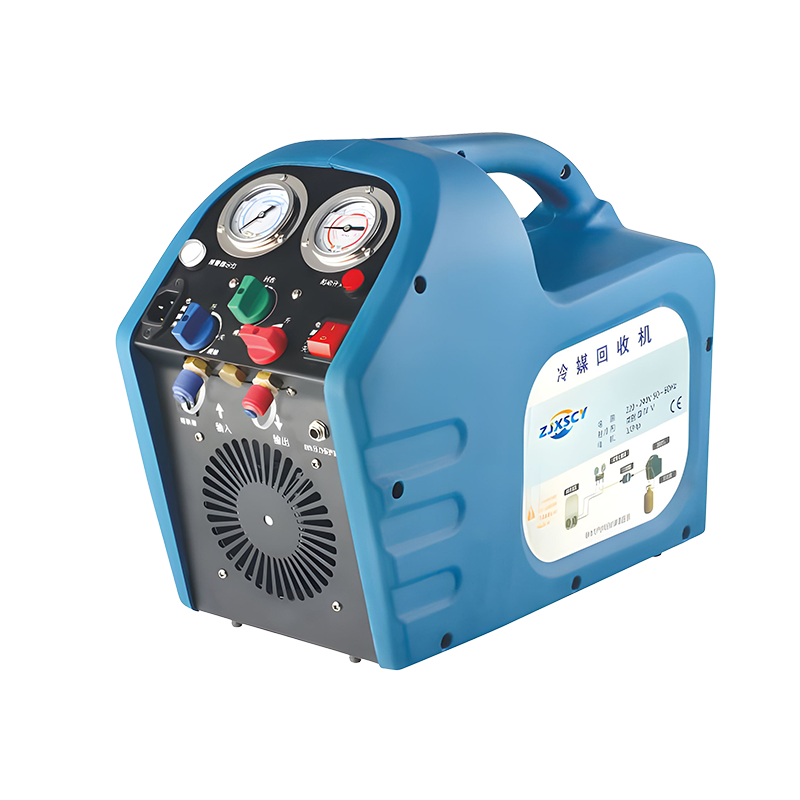
The heart of any recovery machine is its compressor, which must handle refrigerants in both vapor and liquid states. This component faces the demanding conditions and therefore utilizes the carefully selected materials.
Compressor Housings: Many recovery machines use hermetic or semi-hermetic compressors with housings made from cast iron or steel. These materials provide the strength necessary to contain system pressures, which can exceed 400 psi during recovery from high-pressure refrigerants like R-410A. Cast iron is particularly common because it offers good vibration-damping properties and wear resistance at a reasonable cost.
Internal Moving Parts: Pistons, connecting rods, and crankshafts are typically manufactured from hardened steel or ductile iron. These components must maintain precise clearances while cyclic loads. The steel alloys used are often similar to those found in automotive compressors, selected for their fatigue resistance and ability to hold dimensional tolerances under varying temperatures.
Cylinder Walls and Bores: The surfaces where pistons or rolling pistons move are critical wear interfaces. These areas often receive special treatment. Some manufacturers use cast iron cylinder liners with a controlled porosity that retains oil for lubrication. Others apply hard coatings such as nickel-silicon carbide or electroless nickel to the bore surfaces, providing a wear-resistant surface that also offers some corrosion protection against aggressive refrigerants.
Valve Plates and Reeds: The valves controlling refrigerant flow into and out of the compression chamber are typically thin spring steel reeds. These must flex millions of times without fatigue failure. The valve plate, which houses these reeds, is commonly made from sintered metal or hardened steel, machined to provide flat sealing surfaces.
The outer casing of a recovery machine protects internal components from job site hazards while allowing technicians to transport the equipment regularly. Material choices here reflect a trade-off between durability and weight.
Steel Frames and Chassis: For heavy-duty recovery machines intended for frequent commercial use, powder-coated steel remains the dominant material for the main frame and roll cages.
Steel provides impact resistance, protecting the compressor and motor if the machine is dropped or bumped.
The powder coating adds a layer of corrosion resistance against moisture and incidental chemical contact.
The weight penalty of steel is accepted in exchange for longevity in demanding environments.
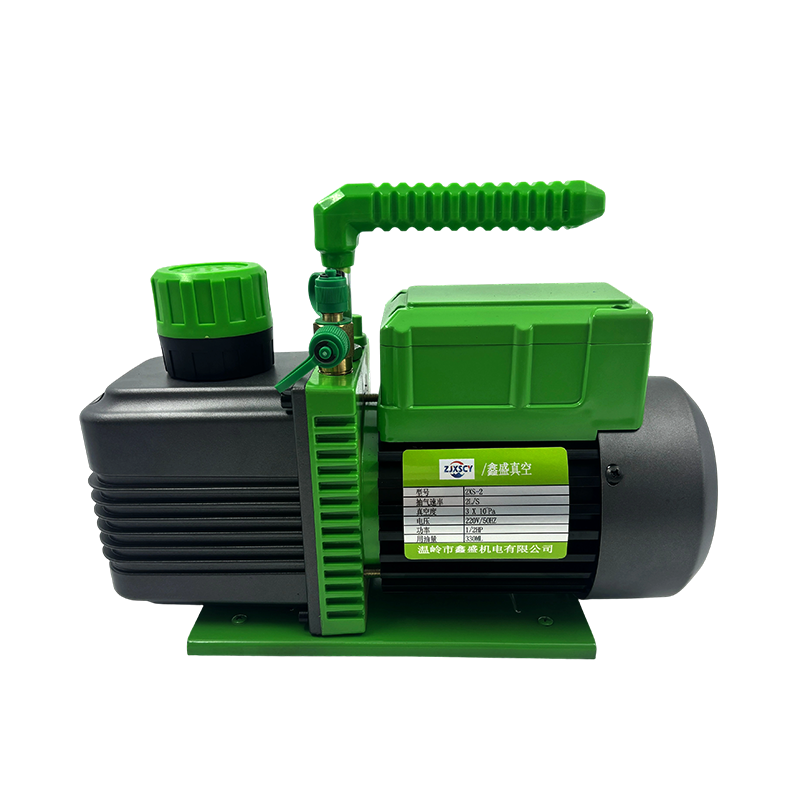
High-Density Polyethylene (HDPE) Housings: Many portable recovery machines incorporate structural foam or injection-molded HDPE for outer covers and carrying handles.
HDPE is lightweight, which reduces technician fatigue during transport.
It offers good chemical resistance to refrigerant oils and minor spills.
The material does not corrode and provides electrical insulation, adding a layer of safety.
However, it cannot provide the structural strength of steel for load-bearing components.
Aluminum Components: Some mid-range and high-end machines use aluminum for brackets, fan shrouds, and base plates.
Aluminum offers a favorable strength-to-weight ratio, lighter than steel but stronger than plastic.
Its natural corrosion resistance is beneficial in humid environments or marine applications.
It is often used where heat dissipation is needed, such as around cooling fans and condenser coils.
The materials that contact the refrigerant directly throughout the machine's internal passages must resist chemical attack and maintain sealing integrity across wide temperature ranges.
O-Rings and Seals: The choice of elastomer for seals is perhaps the chemically critical material decision. Standard refrigerants and their associated lubricants require specific seal materials.
Nitrile (Buna-N) is commonly used for machines designed for CFCs, HCFCs, and HFCs with mineral oil or alkylbenzene lubricants.
Viton (FKM) is increasingly specified, particularly for machines handling high-pressure refrigerants or those exposed to the synthetic POE oils used with HFCs like R-134a and R-410A. FKM offers broader chemical compatibility and higher temperature resistance.
For machines rated for new low-GWP refrigerants like R-32 or R-1234yf, which can be mildly flammable, seal materials may need to be evaluated for compatibility and permeability. HNBR (hydrogenated nitrile butadiene rubber) is sometimes used in these applications.
Internal Tubing and Manifolds: The passages connecting the compressor, condenser, and valves must be leak-tight and corrosion-resistant.
Copper tubing is widely used due to its ease of fabrication, good thermal conductivity (useful in condenser sections), and compatibility with refrigerants.
Stainless steel braided hoses are sometimes used for flexible connections internally or as the external inlet and outlet hoses. Stainless steel offers corrosion resistance and strength.
Machined aluminum or brass blocks are commonly used for manifold assemblies that house valves and service ports.
Condenser Coils: To reject heat from the recovered refrigerant, machines use fin-and-tube condensers.
Copper tubes with aluminum fins are the common and economical combination.
For enhanced corrosion resistance in coastal or industrial environments, some manufacturers offer coils with copper fins or epoxy-coated aluminum fins to prevent galvanic corrosion between dissimilar metals.
As refrigerants evolve and regulations change, the materials used in recovery machines continue to adapt.
Compatibility with New Refrigerants: The phasedown of high-GWP HFCs and the introduction of A2L (mildly flammable) and A3 (flammable) refrigerants are driving material reviews. Seals and motor components must be evaluated for compatibility with these new chemicals and for their ability to prevent leaks that could create flammable concentrations. Flame-resistant enclosures and spark-proof internal components are becoming considerations for machines rated for flammable refrigerants.
Enhanced Durability Coatings: To extend service life, some manufacturers apply anti-wear coatings to internal compressor parts. DLC (diamond-like carbon) coatings on bearing surfaces can reduce friction and improve wear resistance, particularly in machines that see frequent use.
Recycled and Sustainable Materials: As with many industries, there is growing interest in using recycled plastics and metals in non-critical components such as outer housings and packaging, provided they meet performance requirements.
Related Products

Chengbei Industrial Zone, Xinhe Town, Wenling City, Zhejiang Province, China
Copyright © Wenling Xinsheng Mechanical and Electrical Co., Ltd. All Rights Reserved.



 English
 русский
 Español